

Is Tallow and Honey Balm Worth Trying for Dry Skin?
Quick Summary
Yes, a tallow and honey balm can be worth trying for dry skin. Unlike a lotion, it is water-free and built from lipids and oils that condition the skin and help reduce moisture loss. Patch test first and apply it consistently for best results.
- A tallow and honey balm is water-free, so it conditions skin rather than adding water to it.
- Apply to slightly damp skin, since the balm helps reduce evaporation of water already on the surface.
- Thick balms work best when applied consistently, especially before bed.
- Patch test on the inner forearm and wait at least 24 hours before full use.
Table of Contents
- How a Tallow and Honey Balm Differs From a Lotion
- Tallow and Honey Balm Benefits for Dry and Rough Skin
- What Goes Into a Tallow and Honey Balm
- Making Tallow and Honey Balm at Home Versus Buying It
- Reading Tallow and Honey Balm Reviews Critically
- Tallow and Honey Balm for Fine Lines and Wrinkles
- Choosing a Balm and Starting a Patch Test
- Frequently Asked Questions
Is Tallow and Honey Balm Worth Trying for Dry Skin?
Last Updated: November 14, 2026
How a Tallow and Honey Balm Differs From a Lotion
A tallow and honey balm is built differently from the lotion most people reach for. These balms are made without water, so there is no water phase to hold together with emulsifiers and preservatives. That single difference changes how the product works on dry skin.
Most conventional lotions are emulsions. They combine water with oils, humectants such as glycerin, emulsifiers, preservatives and thickeners. Because water is present, those products need careful formulation to stay stable and resist microbial growth.
A tallow balm skips that system. It is a concentrated blend of rendered beef tallow, plant oils and, in some formulas, beeswax. These lipids coat and condition the skin rather than delivering a water-based moisturizer. Think of it less as a lotion with the water removed and more as a rich, lipid-based protective balm.
The practical result is that a little goes a long way. Applied to skin that is already slightly damp, a balm can help reduce the evaporation of the water already on the surface. It does not supply water itself.
Tallow and Honey Balm Benefits for Dry and Rough Skin
Tallow is a rendered animal fat made mostly of triglycerides containing fatty acids. That lipid profile suits rich, nourishing skincare. On dry, rough skin, the main benefit is conditioning: the balm softens the surface and forms a protective layer that can slow moisture loss. For a wider view of natural remedies for chronic eczema and related skin conditions, read that guide.
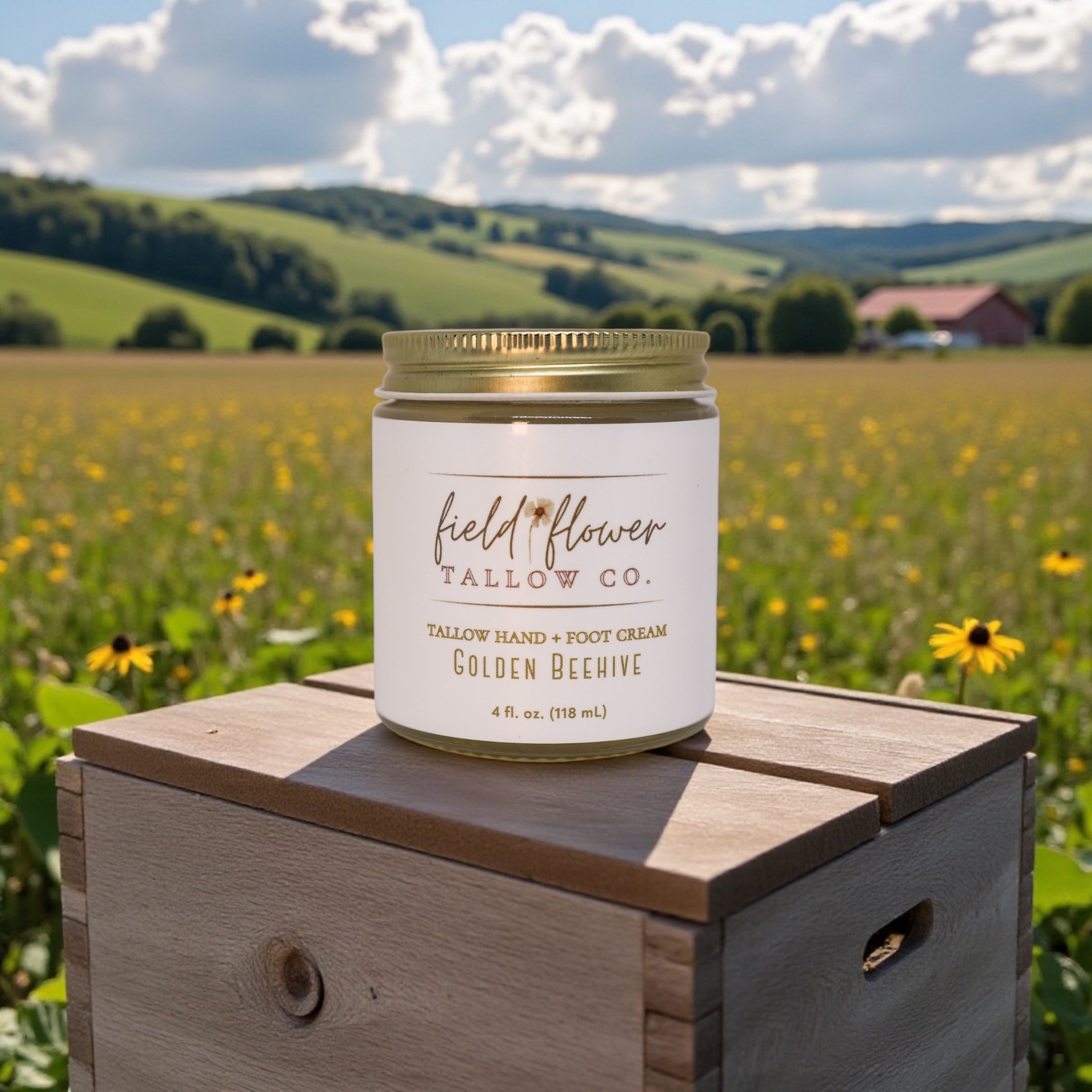
This is most noticeable on areas that take a beating, such as hands, heels, elbows and knees. Our Golden Beehive Tallow Hand + Foot Balm is made for exactly these spots. It combines grass-fed tallow with raw honey and organic beeswax, and it is designed to stay on the skin longer than a thin lotion.
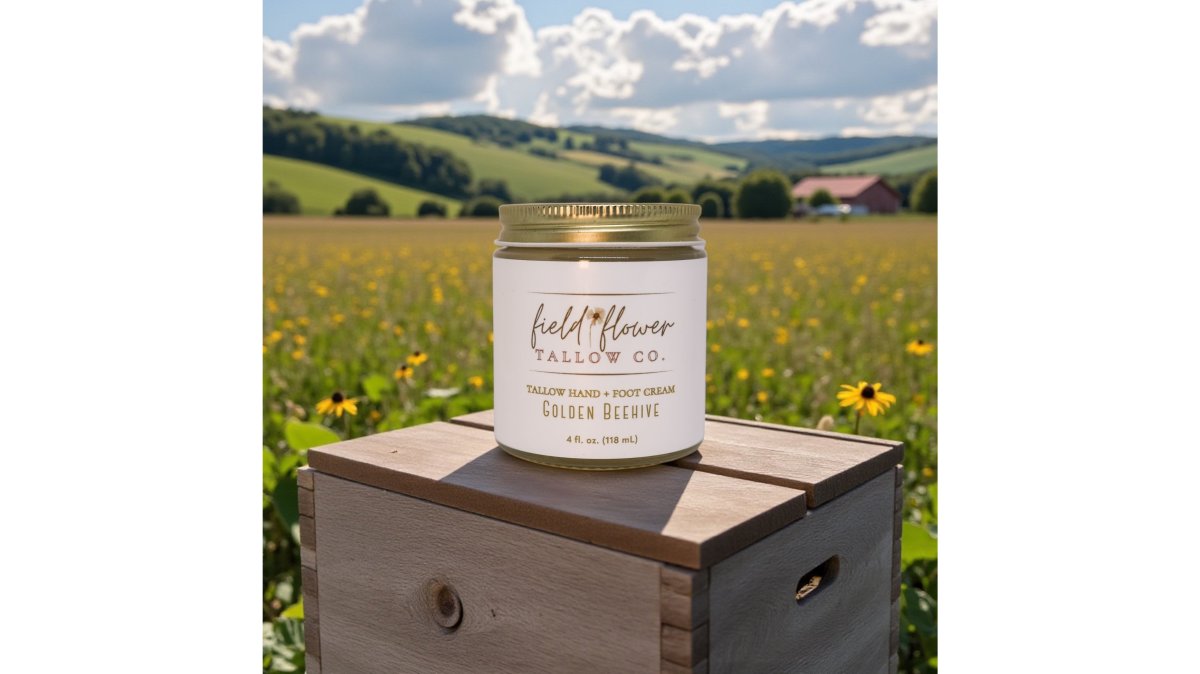
A common mistake is judging a balm after one application on a dry patch. Thick balms work best when applied consistently, especially before bed, when the layer has time to condition the skin overnight.
Where Honey Fits In
Raw honey is included in the formula as part of the sensory experience of the balm. It is an ingredient that adds to the conditioning role of the tallow and oils rather than replacing it. Honey does not change the anhydrous nature of the balm, and it should not be read as a source of water for the skin.
What Goes Into a Tallow and Honey Balm
Ingredient lists vary by product, so the most reliable approach is to read the label for the specific balm you are considering. In these formulas, the core ingredients are typically grass-fed beef tallow, plant oils, and beeswax where the formula calls for structure. Raw honey appears in honey-forward formulas such as the Golden Beehive line.
What separates a good balm from a mediocre one is not the length of the list but how each ingredient functions inside a water-free formula. Here is what each one is actually doing.
Beef tallow is the primary lipid. It is a rendered fat composed mainly of triglycerides, and its fatty acid profile gives the balm a rich, conditioning feel. On the skin it provides concentrated lipids that help soften rough texture and form a protective layer that can slow moisture loss. Tallow is not a source of water, and it does not pull water into the skin; its job is to condition and to help seal in moisture already present.
Olive oil is a plant oil used in some formulas to help condition the skin.
Jojoba oil is a plant oil used in some formulas to help condition the skin.
Coconut oil is a plant-derived oil used in some formulas to help condition the skin.
Beeswax, used in selected formulas, adds structure to the balm.
Vitamin E (tocopherol) is used in some formulas as an antioxidant.
Raw honey is included in honey-forward formulas for its softening character and as part of the sensory experience of the balm. Honey adds to the conditioning role of the tallow and oils rather than replacing it, and it does not change the anhydrous nature of the balm.
Some balms also contain essential oils or botanical fragrance blends. These affect scent and can matter for anyone with sensitive skin. Check the ingredient list before you buy, especially if you react to fragrance.
Be cautious with any product that claims a long list of ingredients you never see on the label. A balm that is genuinely simple should be easy to read, and every ingredient on it should have a clear job in a lipid-based formula.
Making Tallow and Honey Balm at Home Versus Buying It
A ready-made balm is a straightforward way to try a finished formula. The Golden Beehive Tallow Hand + Foot Balm is one option.
Whether you make a balm yourself or buy one, keep it dry and use clean hands, since wet fingers or a damp jar can introduce water into an anhydrous product.
Reading Tallow and Honey Balm Reviews Critically
Reviews can help, but they need context. Look for detail. A useful review mentions skin type, the area treated, how long the balm was used and whether the reviewer had a reaction. Vague praise such as "amazing" tells you little.
Pay attention to scent reports too, since fragrance is a common reason people react to a product.
Treat any single review as one person's experience. Patterns across many reviews are more informative than any one story.
Tallow and Honey Balm for Fine Lines and Wrinkles
Many shoppers ask whether a tallow balm can smooth fine lines. A balm can help skin feel softer and more comfortable. That is a different claim from reducing wrinkles or changing skin structure.
If wrinkles are your main concern, read a focused guide before you buy. The non-toxic tallow moisturizer for face guide covers how facial balms differ from body products, and this article on whether beef tallow really reduces wrinkles examines the claims directly.
Choosing a Balm and Starting a Patch Test
Start by matching the product to the job. For a fuller walkthrough, see how to find a handmade tallow balm that suits your skin. A hand and foot balm suits cracked heels and rough knuckles. A lighter body balm may suit larger areas. Consider the scent, the texture and whether the formula contains anything you have reacted to before.
Before using any new product widely, do a patch test. Apply a small amount to a discreet area, such as the inner forearm, and wait at least 24 hours. Stop using it if you notice redness, itching or swelling. People with eczema or other chronic skin conditions should check with a dermatologist before adding a new product, especially one containing essential oils.
Start with one product, use it consistently for a few weeks and judge the results on your own skin.
Frequently Asked Questions
Is tallow and honey balm the same as a lotion?
No. A tallow and honey balm is water-free and built from lipids and oils. Lotions are water-based emulsions. The balm conditions and protects the skin rather than adding water to it.
Can a tallow balm be used on the face?
Facial use depends on the product and your skin. Check the ingredient list and do a patch test first, particularly if you have sensitive skin.
How do I know if I'll react to a balm?
Patch test on a small area for at least 24 hours before full use. Stop if you notice irritation, and consult a dermatologist if you have a chronic skin condition.
Frequently Asked Questions
Is tallow and honey balm good for your skin?
Tallow and honey balm can be a good choice for dry, rough skin because it is anhydrous: it contains no water phase and delivers concentrated lipids that condition the skin and help reduce moisture loss. Honey adds a soothing, softening quality that many people enjoy. Results vary by skin type, and the balm works best when applied to slightly damp skin so it helps hold in water already present. If you have a known allergy to honey, beeswax or essential oils, read the ingredient list and patch test before using it on larger areas.
Can tallow and honey balm help soften dry skin?
Yes. Tallow provides rich fatty acids that help soften rough, dry patches, and raw honey adds a gentle softening feel. Because the balm is water-free, it works by conditioning the skin and forming a protective lipid layer rather than adding water. Massaging a small amount into hands, heels, elbows or knees, ideally before bed, gives the balm time to work. For severely cracked skin, consistent nightly use is more effective than occasional heavy application.
How do you use tallow and honey balm?
Scoop a small amount with clean fingertips, warm it between your hands until it softens, and massage it into the target area until absorbed. Apply it to slightly damp skin after washing to help reduce evaporation of the water already on the surface. Because tallow balms are concentrated, a little goes a long way. Use clean hands every time to keep the balm free of water contamination, and store it with the lid closed in a cool, dry place.
Can you make tallow and honey balm at home?
Home versions are possible: rendered tallow, a plant oil, beeswax and raw honey can be combined and cooled. However, honey introduces water and microbial risk, so homemade balms should be kept refrigerated, used within a short period, and made with careful hygiene. Commercially made balms are formulated and tested for consistency, which is useful if you want the same texture and results each time. Whichever route you choose, patch test a small area first.
