

Natural Remedies for Chronic Eczema: A Complete Guide
Table of Contents
- Understanding Chronic Eczema and Its Triggers
- How to Fix Dry Skin Naturally: Dietary and Lifestyle Approaches
- Tallow Balm for Eczema: A Lipid-Rich Alternative
- Topical Natural Moisturizers and Botanical Treatments
- Stress Management and Psychological Support
- Avoiding Environmental Triggers and Chemical Load
- Integrating Natural Remedies with Conventional Medicine
- Frequently Asked Questions
Last Updated: October 4, 2026
Understanding Chronic Eczema and Its Triggers
Chronic eczema is a persistent inflammatory skin condition that causes itching, redness, dryness, and sometimes cracking or bleeding. The condition flares unpredictably and can significantly impact quality of life, especially when conventional treatments provide only temporary relief.
Eczema isn't simply dry skin, it's a dysfunction in how your skin barrier functions. The outer layer of your skin is supposed to lock in moisture and keep irritants out. With eczema, this barrier is compromised, allowing moisture to escape and irritants to penetrate deeper.
Common triggers vary widely between individuals but often include stress, certain fabrics, harsh soaps, temperature changes, humidity fluctuations, and specific foods. Some people find their flare-ups worsen with fragrances, dyes, or synthetic ingredients in conventional skincare.
How to Fix Dry Skin Naturally: Dietary and Lifestyle Approaches
The Gut-Skin Connection
Your digestive system and skin health are deeply interconnected through what researchers call the gut-skin axis. When your gut barrier becomes compromised, a condition sometimes called "leaky gut", inflammatory compounds can enter your bloodstream and trigger or worsen skin inflammation including eczema flare-ups.
The gut-skin axis operates through multiple pathways. Your gut microbiome produces short-chain fatty acids that help regulate immune function and reduce systemic inflammation (The Role of Short Chain Fatty Acids in Inflammation and Body Health).
Supporting your digestive health through whole foods, reducing processed items, and managing stress can help restore this balance. Many people with chronic eczema report that improving their gut health through dietary changes reduces flare-up frequency and severity over time.
Probiotics and Prebiotics for Skin Health
Probiotics are beneficial bacteria that support a healthy gut microbiome, while prebiotics are the plant fibers that feed these beneficial bacteria. Together, they help restore the microbial balance that many people with eczema have lost.
Fermented foods like sauerkraut, kimchi, kefir, and yogurt naturally contain probiotics. Prebiotic-rich foods include garlic, onions, asparagus, bananas, and chicory root. Adding these to your diet provides both the beneficial bacteria and the food they need to thrive.
Some people also take probiotic supplements, though whole food sources are generally preferred because they provide a broader spectrum of beneficial organisms. The most important thing is consistency, rebuilding your microbiome takes weeks or months, not days.
Anti-inflammatory Foods and Herbal Remedies
Certain foods and herbs have natural anti-inflammatory properties that may help reduce eczema flare-ups when incorporated into your regular diet.
Turmeric contains curcumin, a compound with documented anti-inflammatory effects (Curcumin: A Review of Its’ Effects on Human Health). Licorice root, burdock root, and chamomile have been used traditionally to support skin health and reduce inflammation.
Omega-3 rich foods like fatty fish, flaxseeds, and walnuts help reduce systemic inflammation. Many people with eczema find that increasing their omega-3 intake noticeably improves their skin condition over 4-6 weeks.
Avoid foods that commonly trigger inflammation in sensitive individuals: refined sugar, ultra-processed foods, and excessive omega-6 oils (like vegetable and canola oil). Some people also find that certain foods like dairy, eggs, or nuts worsen their flare-ups, this is highly individual.
Tallow Balm for Eczema: A Lipid-Rich Alternative
Why Anhydrous Skincare Differs from Water-Based Lotions
Most conventional moisturizers rely on water as their primary ingredient, supported by humectants to draw moisture into the skin and emulsifiers to keep the water and oil phases stable.
Water-based lotions require preservatives to prevent microbial growth. They also tend to evaporate quickly, which means their moisturizing effect is temporary. For eczema-prone skin that needs sustained nourishment and protection, a water-based lotion often provides only short-term relief before the skin becomes dry again.
Unscented Tallow Face + Body Balm →
Anhydrous tallow balms work on a completely different principle. They contain no water phase, so they don't require preservatives or emulsifiers.
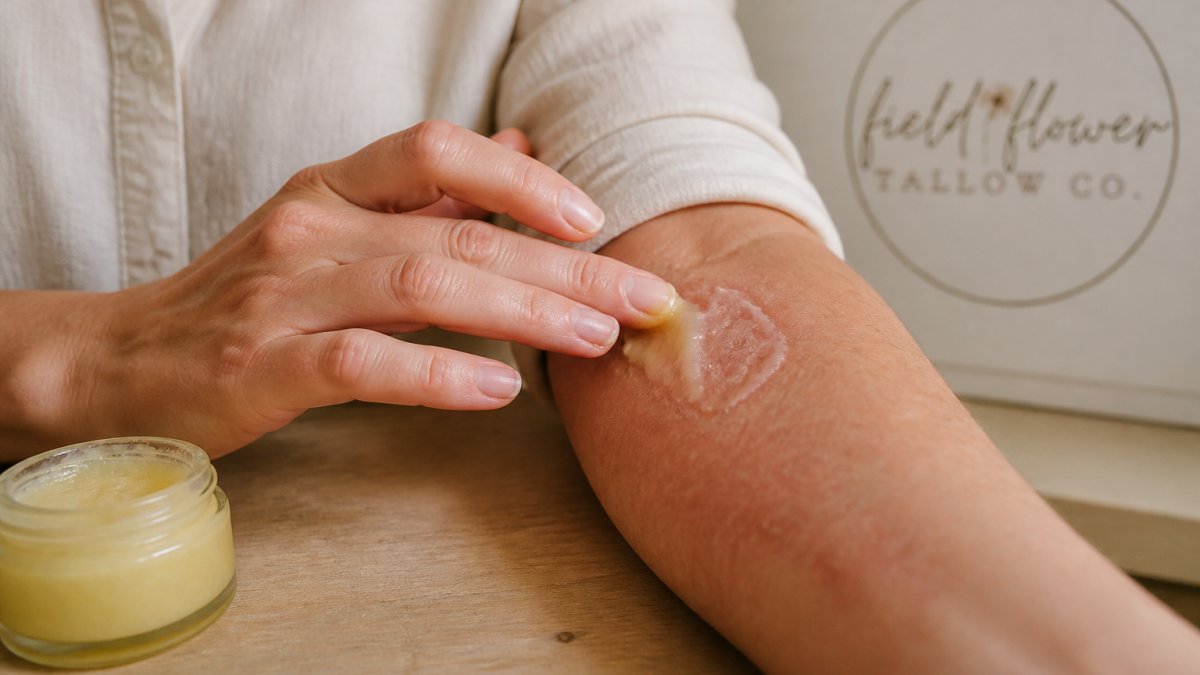
Supporting Your Skin Barrier with Rich Lipids
Your skin barrier is primarily made of lipids. When you have eczema, this lipid layer is deficient or damaged, which is why water-based products alone often fail to provide lasting relief.
Grass-fed beef tallow is composed primarily of fatty acids.
Field Flower Tallow Co.'s anhydrous balms, like the Unscented Tallow Face + Body Balm, contain grass-fed beef tallow, organic coconut oil, organic olive oil, and vitamin E.

A small amount of tallow balm goes a long way because it's concentrated. Unlike thin lotions that require frequent reapplication, a dime-sized amount warmed between your hands covers your entire face or larger body areas.
Topical Natural Moisturizers and Botanical Treatments
Essential Oils and Herbal Infusions
Essential oils and herbal infusions can support skin health, but they require careful consideration when you have chronic eczema. Some essential oils have anti-inflammatory or soothing properties, while others can be irritating to already-sensitive skin.
Lavender essential oil is traditionally used for its calming properties. Chamomile has been used for centuries to soothe irritated skin. Carrot seed oil supports skin regeneration. These ingredients appear in some tallow balms.
However, not every essential oil is appropriate for eczema. Citrus oils, for example, can be phototoxic and irritating. Strong fragrances, even natural ones, can trigger flare-ups in sensitive individuals.
Patch Testing for Natural Ingredients
This is where many people make costly mistakes. Just because an ingredient is natural doesn't mean it won't irritate your specific skin. Before applying any new product to your face or affected areas, patch test it first.
Apply a small amount to a discrete area like your inner arm or behind your ear. Wait 24-48 hours. If you see no redness, itching, or irritation, it's likely safe to use more broadly. If you do react, you've caught it before it affects your whole face.
This is especially important with essential oils and herbal infusions. Natural doesn't mean universally safe, it means the ingredient comes from a plant or animal source, not that it won't trigger your individual skin.
Step |
Duration |
What to Watch For |
|---|---|---|
Apply small amount to test area |
Immediate |
Stinging or burning sensation |
Wait and observe |
24-48 hours |
Redness, itching, swelling |
Gradually increase use |
1-2 weeks |
Any delayed reactions |
Monitor full application |
Ongoing |
Changes in flare-up pattern |
Stress Management and Psychological Support
Stress is a well-documented trigger for eczema flare-ups. When you're under stress, your body releases cortisol and other inflammatory compounds that can activate or worsen skin inflammation. The relationship is bidirectional, eczema causes stress and embarrassment, which then triggers more flare-ups.
Breaking this cycle requires deliberate stress management. Practices like meditation, deep breathing, yoga, or regular exercise have been shown to reduce both stress levels and eczema severity. Even 10-15 minutes of daily practice can make a measurable difference.
The psychological impact of chronic eczema is often underestimated. Living with visible skin irritation, constant itching, and unpredictable flare-ups takes a real emotional toll.
Avoiding Environmental Triggers and Chemical Load
Your environment contains hundreds of potential irritants that can trigger eczema flare-ups. Reducing your exposure to these triggers is often as important as adding beneficial treatments.
Harsh soaps and detergents strip your skin barrier of its natural lipids. A traditional soap made with tallow and goat's milk, like Field Flower Tallow Co.'s Unscented Tallow + Goat's Milk Soap, cleanses without stripping.

Fabric softeners, dryer sheets, and heavily scented laundry products leave residues on your clothes that contact your skin all day. Switching to fragrance-free laundry products can eliminate a major source of irritation.
Water temperature matters. Hot showers feel good temporarily but strip your skin of protective oils and increase water loss. Lukewarm showers are gentler.
Humidity levels affect eczema. Very dry air worsens flare-ups, while excessive humidity can encourage bacterial growth. A humidifier in winter and good ventilation in summer help maintain balanced conditions.
Integrating Natural Remedies with Conventional Medicine
Natural remedies and conventional medicine aren't opposing forces, they work best together. If you have moderate to severe chronic eczema, you likely need both approaches.
Conventional treatments like topical corticosteroids or prescription moisturizers can control acute flare-ups and provide rapid relief when your skin barrier is severely compromised.
Work with your dermatologist or primary care provider. Tell them about the natural remedies you're using, not to get permission, but so they understand your full treatment plan.
This integrated approach also means recognizing when natural remedies alone aren't enough. If you're having frequent severe flare-ups that interfere with sleep or daily function, prescription treatment is appropriate and necessary.
Managing chronic eczema requires a multifaceted approach that addresses triggers, supports your skin barrier, and manages stress.
Frequently Asked Questions
What are the primary triggers for chronic eczema flare-ups?
Common triggers include harsh soaps and detergents, extreme temperatures, stress, certain fabrics, allergens, and foods that cause inflammation. Identifying your personal triggers is essential—keeping a flare-up diary helps track patterns. Environmental triggers like low humidity, chemical irritants, and fragrances can also worsen symptoms. Once you recognize your triggers, you can avoid them and reduce the frequency and severity of flare-ups.
How does a lipid-rich skincare routine support the skin barrier?
The skin barrier is a protective layer of lipids that locks in moisture and keeps irritants out. Water-based lotions rely on water and humectants, but they don't provide the concentrated lipid support your barrier needs. Lipid-rich products like tallow balms deliver fatty acids and plant oils that coat and condition the skin, helping seal in moisture and reduce water loss. This strengthens your barrier's ability to protect against flare-ups.
Can anhydrous balms help with chronic dry skin and eczema?
Yes. Anhydrous balms like tallow-based formulas are water-free and deliver concentrated lipids directly to the skin. Unlike water-based lotions that evaporate, anhydrous balms form a protective layer that helps reduce moisture loss and condition dry, irritated skin. They're especially effective for eczema because they provide lasting nourishment without the water and emulsifiers that can trigger sensitivity in reactive skin.
What is the difference between water-based lotions and tallow-based balms?
Water-based lotions are emulsions containing water, humectants, oils, and emulsifiers to keep the formula stable. They rely on water and humectants to deliver hydration. Tallow-based balms are anhydrous—water-free—and centered on concentrated lipids from grass-fed tallow and plant oils. Balms don't need emulsifiers or preservatives because there's no water. They condition and protect the skin by forming a lipid-rich layer, rather than supplying water-based hydration.
How can diet and lifestyle support skin health in those with eczema?
Diet plays a major role in skin health through the gut-skin axis. Anti-inflammatory foods like fatty fish, leafy greens, and turmeric can reduce flare-ups. Probiotics and prebiotics support gut health, which influences skin inflammation. Stress management through meditation or exercise also helps—stress is a known eczema trigger. Staying hydrated, getting adequate sleep, and avoiding smoking and alcohol further support your skin's ability to heal and resist flare-ups.
What natural ingredients help soothe eczema without causing irritation?
Chamomile, licorice root, and burdock root have calming and anti-inflammatory properties. Coconut oil and olive oil condition and soften irritated skin. However, some people react to essential oils or botanical extracts, so patch testing is crucial—apply a small amount to a hidden area first and wait 24 hours. For sensitive or reactive skin, unscented formulas with minimal ingredients are safest. Field Flower Tallow Co.'s Unscented Tallow Face + Body Balm contains only tallow, coconut oil, olive oil, and vitamin E—no fragrances or essential oils to trigger sensitivity.
Should I use natural remedies instead of conventional eczema treatments?
Natural remedies and conventional medicine work best together. Prescription treatments like topical corticosteroids or immunosuppressants are effective for acute flare-ups. Natural approaches—diet changes, stress reduction, barrier-supportive skincare, and herbal remedies—support long-term management and prevention. Talk with your dermatologist before stopping any prescribed treatment. A combined approach addresses inflammation, supports healing, and reduces future flare-ups more effectively than either approach alone.