

Family Skincare Products: What Actually Works for Everyone
Last Updated: November 19, 2026
Quick Summary
Family skincare products work best as a small, simple set that the whole household can use safely, rather than a cabinet of single-purpose bottles. A basic routine of gentle cleansing, moisturizing and daytime sun protection covers most needs. Patch test each new family skincare product before using it on everyone.
- Cleanse gently, moisturize, and use broad-spectrum sunscreen during the day.
- Read the full ingredient list, since fragrance can hide many individual ingredients.
- Patch test new products on the inner forearm for up to seven days.
- Add one new product at a time and wait one to two weeks between additions.
- Keep infants and young children on simple, carefully chosen products and check with a pediatrician.
Table of Contents
- Why Family Skincare Needs a Different Approach
- Building a Simple Family Skincare Routine
- Reading Labels: Natural Skincare Ingredients Explained
- Choosing Skincare Products for Sensitive Skin
- Healthy Skin Tips for the Face
- Matching Products to Each Family Member
- Booking Your First Family Skincare Starter Set
- Frequently Asked Questions
Why Family Skincare Needs a Different Approach
Family skincare is not one routine scaled up.
Anhydrous skincare, meaning balms made without a water phase, works differently from most drugstore lotions. Conventional lotions are emulsions that combine water, humectants, emulsifiers and preservatives. Our balms are built around grass-fed beef tallow and plant oils instead, which concentrate lipids directly onto the skin.
Simplicity is the real advantage here. Fewer products mean fewer ingredients to check, fewer chances of a reaction to track down, and a routine that a busy household will actually keep up with.
Building a Simple Family Skincare Routine
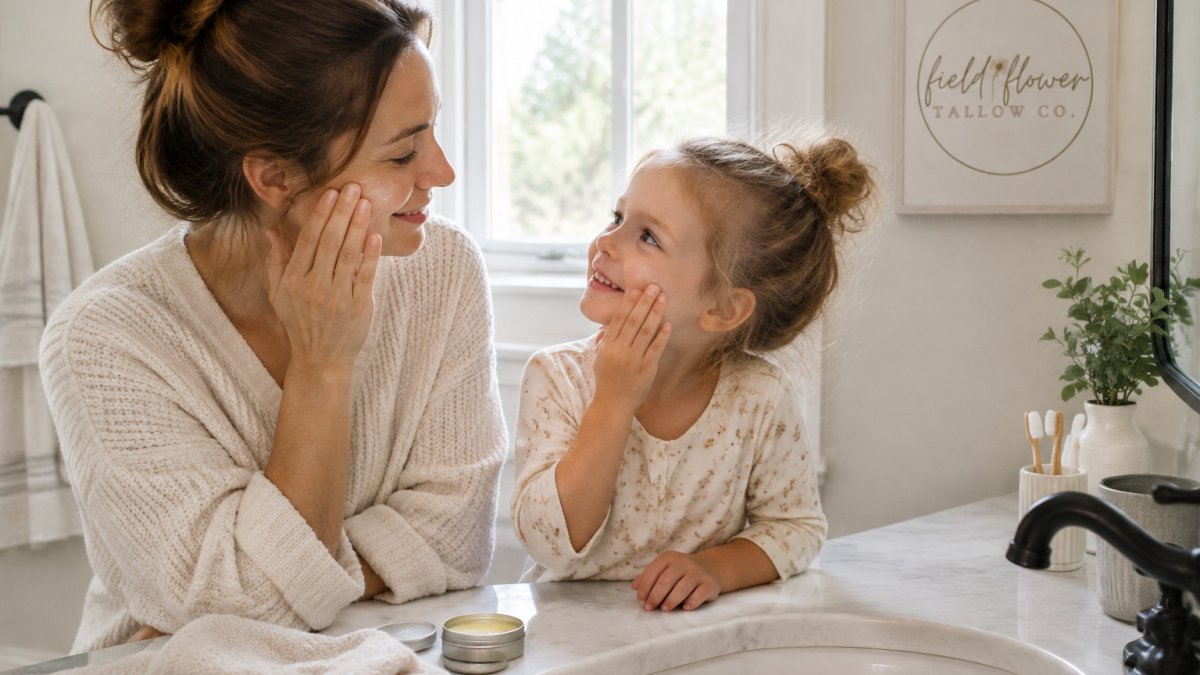
A workable family routine has three steps: cleanse gently, moisturize, and protect from sun during the day. Most households do not need more than that, and simple family skincare products that cover those steps are usually enough.
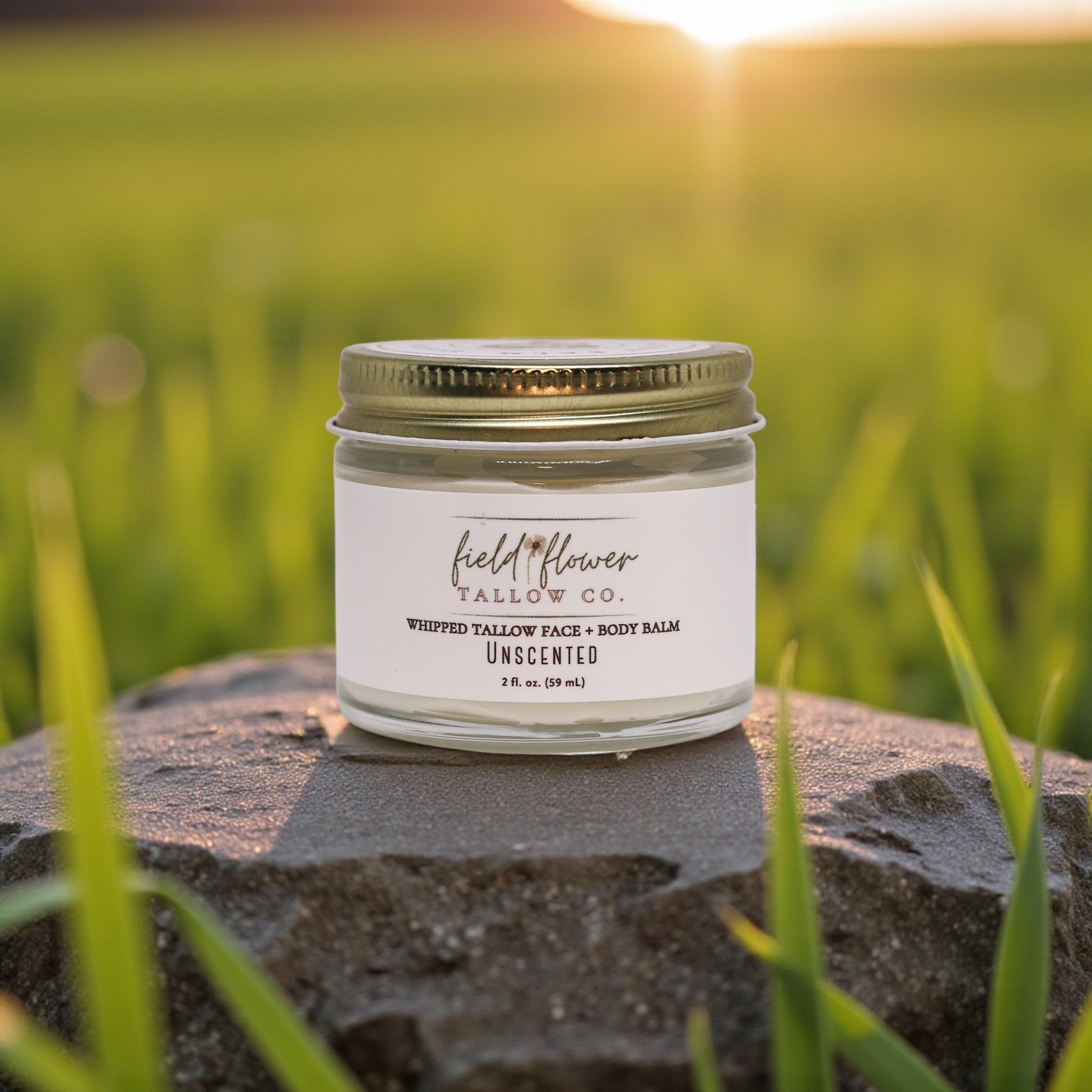
Cleansing should be mild. For adults who want a simple everyday option, our Unscented Tallow Face + Body Balm works as a single moisturizer for face and body, with no fragrance or essential oils added.
Anyone who wants a fuller plan can look at The Complete Tallow Face Routine, which lays out morning and evening steps for the face.
Apply balms to slightly damp skin when skin feels especially dry. The water already on the surface stays put longer under a lipid layer, though the balm itself does not supply that water.
Reading Labels: Natural Skincare Ingredients Explained
"Natural" is not a regulated term on skincare labels in the United States, so the word alone tells you very little. The ingredient list tells you far more.
Look for recognizable names such as beef tallow, olive oil, coconut oil or beeswax. Be cautious with long lists of unfamiliar chemical names, and be especially cautious with fragrance, which can hide dozens of individual ingredients under a single word.
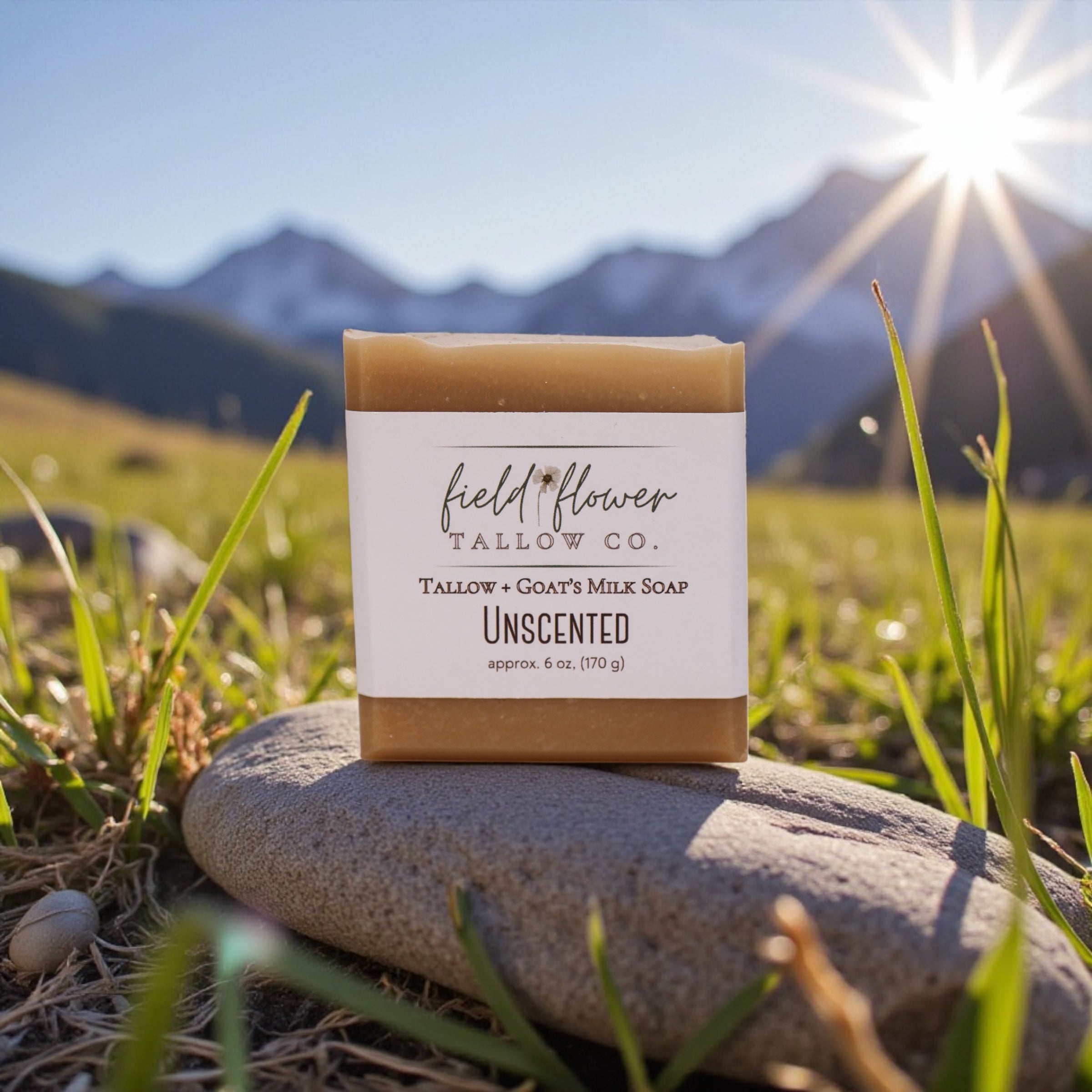
If you want to judge the quality of an animal-derived ingredient such as tallow, our guide on how to identify high quality grass-fed tallow explains what to look for on the label and from the producer. For a simple cleansing option, the Unscented Tallow + Goat's Milk Soap pairs tallow with goat's milk and carries no added fragrance or essential oils.
Choosing Skincare Products for Sensitive Skin
Sensitive skin is not a diagnosis so much as a pattern: skin that stings, burns, itches or reddens in response to things that other people tolerate without noticing.
A short ingredient list is the most practical starting point, because every additional ingredient is another variable you may have to isolate later. Read the full list rather than the front label, and treat "fragrance," "parfum" and individual essential oils as separate items to evaluate rather than as one category.
A Patch-Test Protocol That Actually Works
Patch testing is only useful if you run it the same way each time. A workable household protocol:
- Choose one test site, the inner forearm is standard, though behind the ear is common for facial products.
- Apply a small amount (roughly the size of a pea) to a marked area about the size of a coin, once or twice daily.
- Leave it uncovered and do not wash the area immediately after application.
- Check at 24 hours, then again at 48 to 72 hours, and keep going for up to seven days. Delayed reactions are common and will be missed by a 24-hour check.
- Record the product, the date and any reaction. A phone note is enough.
A negative patch test is not a guarantee (the American Academy of Dermatology). It reduces the chance of a reaction on larger areas; it does not eliminate it, and it says nothing about how a product will behave on broken, inflamed or eczema-affected skin.
Watch out: testing a new product on skin that is already flaring tells you nothing useful, because the flare will be blamed on the product. Wait until skin is calm, or get a clinician's guidance first.
Introducing One Product at a Time
Add a single new product and give it at least one to two weeks of regular use before introducing the next. This is slower than most people want, but it is the only reliable way to know which product is responsible when something goes wrong. If two products go on in the same week and a rash appears, you have learned nothing and have to start over.
When a reaction does occur, stop the product rather than pushing through. Mild itching or a small area of redness that settles within a few days of stopping is usually manageable at home. Stop and seek care promptly for swelling, blistering, weeping, hives away from the application site, or any difficulty breathing, those suggest a more serious reaction and are not a wait-and-see situation.
Sensitive Skin and Anhydrous Balms
A lipid-based balm is not automatically gentler than a lotion, and it should not be presented that way. What it offers is a different formulation: concentrated fats and oils that condition the skin and form a protective lipid layer, with no water phase and no emulsifiers.
For skin that is dry, rough or easily irritated, apply a balm to slightly damp skin. The lipid layer helps reduce moisture loss from the surface; the balm itself does not supply water, so the damp-skin step is doing real work.
Products for Babies and Children
Babies and young children have thinner skin and a higher surface-area-to-body-weight ratio, which means anything applied to them is worth more scrutiny than the same product applied to an adult.
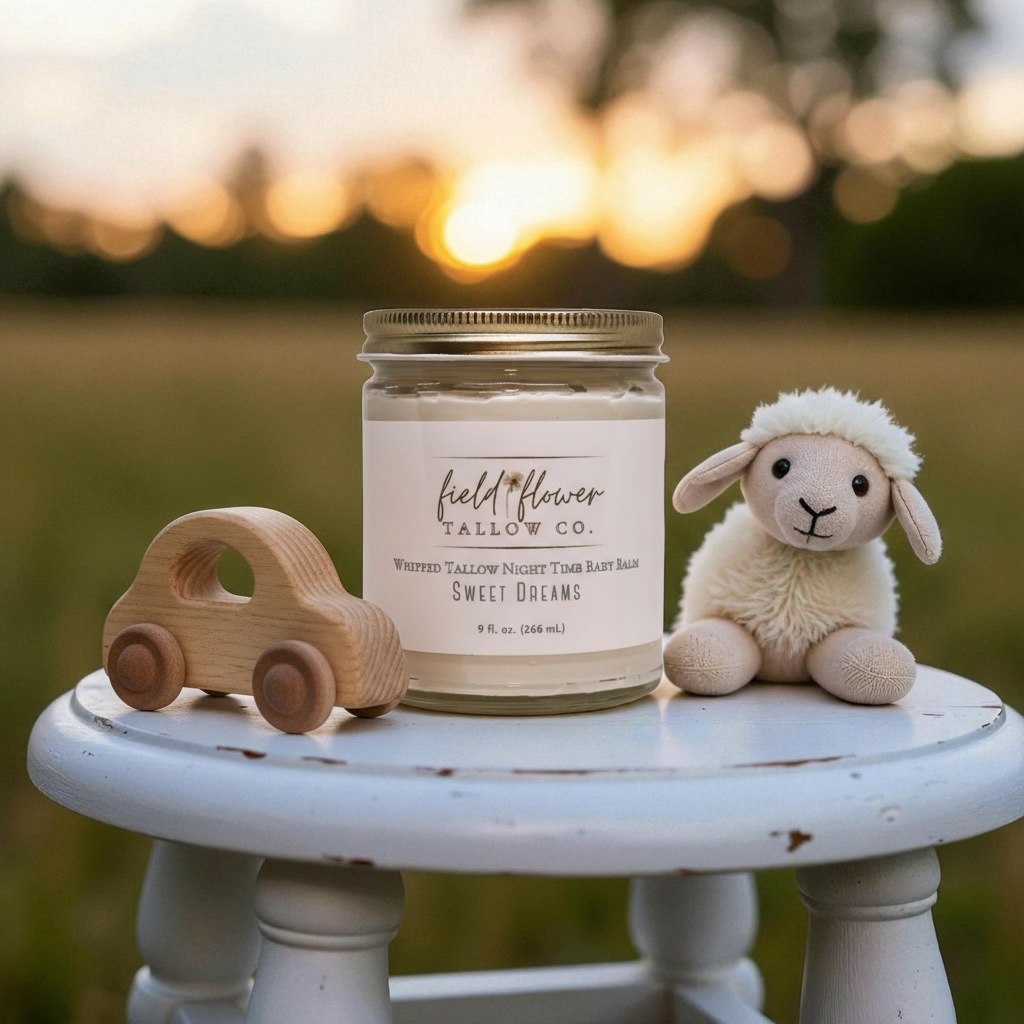
Our Sweet Dreams Tallow Baby Balm is formulated for infants and young children, and it does include essential oils. That is a reason to patch test first on a child with reactive skin, not a reason to skip the step.
Healthy Skin Tips for the Face
Several habits do more for facial skin than any single product. Avoid very hot water, which strips oils.
Sun protection matters at every age, and it is the single habit most often skipped. Choose a sunscreen labeled broad-spectrum and reapply it when you are outdoors for long periods.
Persistent redness, rough patches that do not improve, or any changing mole should be checked by a dermatologist rather than managed at home.
Matching Products to Each Family Member
Most family skincare advice collapses everyone into one routine, which is why it rarely holds up in a real bathroom. Skin changes substantially across a lifetime, in thickness, oil production, barrier function and reactivity, and the same product can be reasonable for one household member and a poor fit for another. The table below is a starting framework, not a prescription; the ingredient list on the specific product always wins.
| Age group | What changes | What to prioritize | What to avoid or question |
|---|---|---|---|
| Infants (under 1) | Thinnest skin, highest absorption relative to body weight, developing barrier | Plain water for most cleansing; a simple, fragrance-free balm for dry patches; pediatrician input before anything new | Essential oils, fragrance, anything on broken or diaper-area skin without clinician guidance |
| Young children (1-12) | Barrier still maturing; eczema and contact reactions common | Short ingredient lists, fragrance-free cleanser, one conditioning balm, daily broad-spectrum sunscreen | Multiple new products at once; scented products; sharing adult products with actives |
| Teens | Oil production and breakouts rise; routines get complicated fast | Gentle cleanser, a lightweight conditioning option, sunscreen; resist over-cleansing | Harsh scrubs, frequent washing, layering many new products during a breakout |
| Adults | Dryness, sensitivity and sun damage accumulate | A simple cleanse-condition-protect routine; a richer balm for dry or mature skin | Assuming a product that worked at 25 still fits at 45 |
| Older adults | Thinner skin, slower barrier recovery, more dryness and fragility | Richer lipid-based conditioning, gentle cleansing, consistent sun protection, annual skin checks | Hot water, aggressive exfoliation, skipping sunscreen because "damage is done" |
The Logic Behind the Bands
The pattern across the table is consistent: the younger the skin, the shorter the ingredient list should be, and the more conservative the choice. Infants and young children get the fewest ingredients and the most clinician involvement. Teens need simplicity more than intensity, the most common mistake in this age group is a reaction to over-cleansing or to a stack of new products introduced during a breakout.
One Product, Several People, With Limits
An unscented face and body balm can reasonably serve adults and older children in the same household, which is the practical argument for a small shared set. It is not a universal product, though.
Watch out: sharing a single jar means shared fingers, and a water-free balm can still pick up contamination from wet or dirty hands. Scoop with clean, dry hands, or decant a small amount into a separate container for each person.
When to Stop Managing at Home
Most everyday dryness and mild irritation responds to a simpler routine and a consistent conditioning step. Some things do not, and the difference matters more in a family setting because a child's skin can deteriorate faster than an adult's.
See a clinician if:
- A rash or dry patch has not improved after two to three weeks of gentle care.
- Skin is weeping, crusting, oozing or feels warm to the touch, possible signs of infection.
- A reaction spreads beyond the application site, or comes with swelling or hives.
- An infant or young child develops a new widespread rash.
- A mole or spot changes in size, shape or color, or a sore does not heal.
A dermatologist or pediatrician can distinguish between ordinary dryness, contact irritation, eczema and something that needs treatment. A balm can support the skin barrier and help reduce moisture loss; it cannot treat an infection or a medical condition, and no product should be asked to.
Booking Your First Family Skincare Starter Set
If you are starting from scratch, begin with a small set: a gentle cleanser, one unscented moisturizer, and a sunscreen for daytime use. Add to the set only after you know how each product sits with your skin.
Several products are sold individually, and bundles are available for those who want a complete routine at a lower combined price. Browse the range, start with the products that match your household, and patch test anything new before it goes on the whole family.
Frequently Asked Questions
Can the same skincare products be used by adults and children?
Many gentle, fragrance-free products can be shared across a family, but the right choice depends on age and skin sensitivity. Babies and young children have thinner, more reactive skin, so simple formulas with short ingredient lists are the safest starting point. Introduce any new product on one small area first, wait a day or two, and watch for redness, itching or bumps. Ingredients that suit an adult may still irritate a child, so check the label and, when in doubt, ask a pediatrician before using a product on a baby.
What should families look for on a skincare ingredient label?
Look for short, recognizable ingredient lists where each item is something you can identify. Fragrance-free or unscented labels are a good sign for sensitive skin, though 'natural' is not a regulated term and does not guarantee gentleness. Essential oils are common triggers for reactions in children and sensitive adults, so check for them even in products marketed as natural. The ingredient list is always printed in order of concentration, which tells you more than front-of-package claims.
What is a simple family skincare routine?
A basic routine has three steps: gentle cleansing, moisturizing and daily sun protection. Use a mild, fragrance-free cleanser once or twice a day, apply a moisturizer while skin is still slightly damp, and use a broad-spectrum sunscreen on exposed areas during the day. Keep the number of products low so it is easy to stick with and easier to see what is causing a reaction if one happens.
Are natural skincare products better for family health?
Natural does not automatically mean gentler. Plant oils, botanical extracts and essential oils can all cause irritation or allergic reactions, and some people react to natural ingredients more than to synthetic ones. Judge a product by its specific ingredients, fragrance content and how your family's skin responds, rather than by the word natural on the label.
