

Best Non Toxic Family Skincare: A 2026 Guide
Table of Contents
- What Makes Skincare Non Toxic for Families?
- Ingredients to Avoid in Family Skincare Products
- Anhydrous Skincare vs Water-Based Lotions: Why It Matters
- Benefits of Grass-Fed Tallow for Skin Health
- Top Non Toxic Family Skincare Picks for Every Age
- How to Read Ingredient Labels Like a Pro
- Building a Simple Non Toxic Skincare Routine
- Conclusion: Choose Confidence for Your Family's Skin
- Frequently Asked Questions
Last Updated: September 9, 2026
Choosing the best non toxic family skincare often feels like decoding a chemistry exam while your toddler smears lotion on the couch. Parents juggle endless product claims, yet the ingredient lists on most bottles remain a mystery. At Field Flower Tallow Co., we believe the answer isn't a longer list of additives, but a shorter one built on recognizable fats and oils. Effective non toxic family skincare prioritizes concentrated, water-free formulas that condition the skin without relying on a cocktail of synthetic chemicals.
Most conventional lotions are mostly water, requiring emulsifiers, preservatives, and stabilizers to hold the mixture together. An anhydrous balm skips the water phase entirely. This guide breaks down what "non toxic" actually means, which ingredients to avoid, and how to build a simple, trustworthy routine for every member of your household, from newborn to grandparent.
What Makes Skincare Non Toxic for Families?
Defining "non toxic" in the beauty aisle is fraught with marketing jargon. Terms like "clean," "green," and "natural" are not federally regulated in the United States. The FDA does not require pre-market approval of cosmetics (the FDA). This makes it essential for families to look for verifiable standards and third-party certifications that offer objective benchmarks.
When evaluating a product for shared family use, look for these concrete markers of safety and transparency:
- EWG VERIFIED™: The Environmental Working Group's certification requires a product to meet strict criteria, including full ingredient transparency and the absence of ingredients on their "unacceptable" list, which includes known carcinogens, reproductive toxins, and allergens. It also prohibits the use of the vague term "fragrance."
- Leaping Bunny: This certification is the gold standard for cruelty-free products, requiring companies to commit to a fixed cut-off date for animal testing and to allow for independent audits of their supply chain (leapingbunny.org).
- NSF/ANSI 305: This standard is specifically for personal care products containing organic ingredients. It ensures that a product contains a meaningful percentage of certified organic content and that the remaining ingredients meet strict safety and environmental criteria.
- USDA Certified Biobased: This label indicates that a product is made from a significant amount of renewable biological ingredients, offering a clear signal of a plant- or animal-based formula rather than a petroleum-derived one.
While these certifications are powerful tools, they are not the only measure of safety. For anhydrous, fat-based skincare, the formulation itself is a key safety feature. A water-free product, like a tallow balm, does not require the same cocktail of preservatives that a water-based lotion does to prevent microbial growth.

:::tip A Practical Family Checklist Instead of relying on a single label, use this three-part checklist when assessing any product for your family:
- Check for Third-Party Marks: Look for EWG VERIFIED™ or Leaping Bunny to confirm a product has been independently vetted.
- Count the Ingredients: A shorter list (ideally under 10) of recognizable fats, oils, and botanicals is a strong indicator of a concentrated, purposeful formula.
- Identify the Base: Is the first ingredient water or a lipid? If it is water, the product requires emulsifiers and preservatives to remain stable. A lipid-based product, by contrast, delivers concentrated nourishment directly to the skin.
This trust-first approach cuts through the noise of marketing claims and focuses on what you can verify, prioritizing products that are free from harmful chemicals and formulated with a simple, safe, and effective base.
Ingredients to Avoid in Family Skincare Products
Certain synthetic chemicals frequently appear in conventional products and are best avoided when shopping for your family. Common culprits include parabens (used as preservatives), phthalates (often hidden in synthetic fragrances), and sulfates (detergents that can strip natural oils) (peer-reviewed research). These are flagged due to concerns about endocrine disruption or irritation, particularly on sensitive skin.
Beyond the obvious offenders, watch for the catch-all term "fragrance" or "parfum," which can legally mask dozens of undisclosed chemicals. For families, choosing fragrance-free or products scented only with essential oils provides greater transparency.
Ingredient to Avoid |
Common Purpose |
Why Families Skip It |
|---|---|---|
Parabens |
Preservative |
Potential endocrine disruptor |
Phthalates |
Plasticizer in fragrance |
Linked to hormone disruption |
Sulfates (SLS/SLES) |
Foaming agent |
Can strip skin, cause irritation |
Synthetic Fragrance |
Scent |
Can mask undisclosed chemicals |
Formaldehyde releasers |
Preservative |
Known irritant, carcinogen concern |
Anhydrous Skincare vs Water-Based Lotions: Why It Matters
The fundamental difference between anhydrous skincare and water-based lotions is the presence of a water phase, which dictates the entire formulation strategy. A water-based lotion is an emulsion that requires emulsifiers to bind oil and water, plus preservatives to prevent microbial growth. An anhydrous product contains no water, so it relies on concentrated fats and oils to deliver lipids directly to the skin.
This water-free approach offers distinct advantages for families. Without water, there is less need for a long list of synthetic preservatives and stabilizers. The product becomes a potent, lipid-rich conditioner that helps soften dry skin and reduce moisture loss by forming a protective layer. A small amount goes a long way because you are applying pure nourishment, not diluted fillers.
Benefits of Grass-Fed Tallow for Skin Health
Grass-fed tallow is a traditional, nutrient-dense fat that closely mirrors the lipid profile of healthy human skin, making it an exceptional base for family skincare. It is rich in fat-soluble vitamins A, D, E, and K, which help nourish skin and support a strong, healthy barrier. When applied, tallow provides lipids that help soften and condition the skin while its rich texture creates a protective layer to help slow moisture loss.
The benefits of grass-fed tallow for skin are particularly noticeable for those with dry, sensitive, or eczema-prone conditions. For families seeking a simple, ancestral-based remedy, tallow offers a biocompatible option without the need for artificial additives.
Top Non Toxic Family Skincare Picks for Every Age
A truly effective family skincare routine acknowledges that a newborn's skin, a teenager's skin, and a grandparent's skin have different biological needs. Understanding these age-specific requirements helps you choose the right formula and application method for each family member.
Babies and Infants (0-2 Years): Focus on Barrier Support
A baby's skin barrier is thinner and less developed, making it more susceptible to dryness and irritation. The priority is to provide a gentle, protective layer that helps reduce moisture loss and shield against environmental stressors. The skin's acid mantle is also still maturing, so it is best to avoid products with a high pH or harsh cleansing agents.
- The Need: A simple, unscented, lipid-rich balm that provides a physical and conditioning barrier.
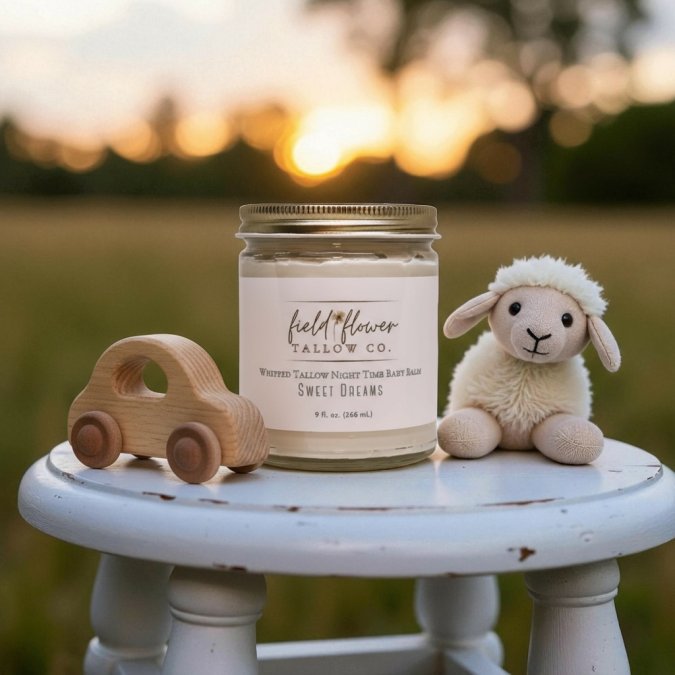
- The Pick: The Sweet Dreams Baby Baby Balm is a gentle choice. Its water-free formula is composed of a few recognizable ingredients, providing concentrated lipids that help soften and condition delicate skin without added fragrance or botanical extracts that could be irritating.
- Application Tip: For babies, a little goes a long way. Warm a pea-sized amount between your fingertips and gently pat it onto clean, slightly skin, especially in areas prone to dryness like the cheeks, elbows, and knees.
Children (2-12 Years): Protection for Active Play
As children become more active, their skin is exposed to more dirt, sweat, and sun. The goal is to maintain a healthy barrier without stripping natural oils. This means using a gentle, non-foaming cleanser and a moisturizer that can keep up with their day.
- The Need: A gentle, effective cleanser and a mineral-based, physical sun barrier.
- The Picks: Any Whipped Tallow Body Balm offers a creamy, conditioning cleanse that removes dirt without disrupting the skin's moisture balance. For outdoor days, the Salted Seaside Tallow Sun Barrier Balm provides protection using non-nano zinc oxide, a physical blocker that sits on the skin's surface and reflects UV rays.
- Application Tip: Apply the sun barrier balm as the last step before heading outside. Reapply every two hours, or immediately after swimming or heavy sweating.
Teenagers (13-19 Years): Balancing Oil and Hydration
Hormonal changes often lead to increased sebum production, which can result in clogged pores and breakouts. It is a common misconception that oily skin does not need moisturizer. Stripping the skin of its natural oils can trigger it to produce even more sebum. The key is to provide lightweight conditioning that supports the barrier without feeling heavy.
- The Need: A non-comedogenic, lipid-based moisturizer that conditions without clogging pores, and a gentle cleanser to manage excess oil.
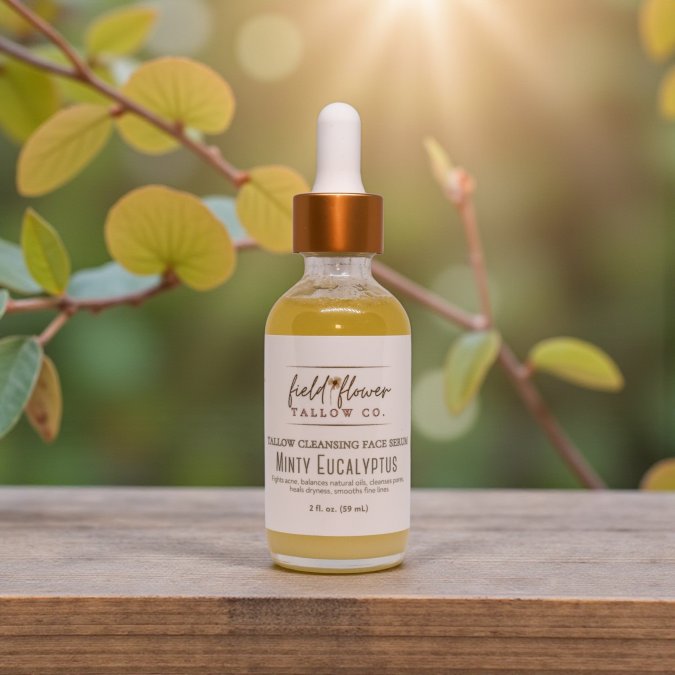
- The Picks: Any Tallow Face Balm is an excellent choice here, as its simple formula is unlikely to trigger breakouts. For cleansing, the Minty Eucalyptus Tallow Cleansing Serum can help dissolve the day's buildup of sebum and impurities without leaving the skin feeling tight or dry.
- Application Tip: Use a very small amount of balm, about a pea size, and press it into damp skin after cleansing. This helps condition the skin while managing the water already present. For the serum, start with only a few drops. Add more if needed.
Adults (20-60+ Years): Targeted Nourishment and Recovery
Adult skin begins to show the effects of cumulative sun exposure and a natural decline in lipid production, leading to dryness and a loss of firmness. The focus shifts to providing rich nourishment and addressing specific concerns like muscle tension or the need for deeper conditioning.
- The Need: Richer, more targeted formulas that deliver a high concentration of lipids and beneficial botanicals to support skin health and overall well-being.
- The Picks: For a calming evening ritual, the Lavender Mint Whipped Tallow Face + Body Balm offers a soothing sensory experience. For full-body recovery after a long day, the Vanilla Gardenia Magnesium Tallow Balm combines lipid-rich tallow with magnesium, an ingredient many adults find helpful for soothing tired muscles and promoting relaxation.
- Application Tip: For very dry areas like heels or elbows, apply a generous layer of balm and cover with socks or clothing to enhance absorption overnight. For the face, always apply to slightly damp skin to help lock in existing moisture.
:::takeaway A Family-Wide Approach While each age group has unique needs, the underlying principle remains the same: choose water-free, lipid-based products with short, recognizable ingredient lists. A single, high-quality tallow balm can often serve multiple family members, simplifying your routine and ensuring everyone benefits from the nourishing, protective power of concentrated fats.

How to Read Ingredient Labels Like a Pro
Mastering the ingredient list is your most reliable tool for finding safe products, and the golden rule is that fewer ingredients often mean fewer problems. Ingredients are listed in descending order of concentration. If water is the first ingredient, the product is primarily water-based and will require more preservatives to maintain stability.
Next, scan for the red flags mentioned earlier: parabens, phthalates, sulfates, and the ambiguous term "fragrance." Look for products that are paraben-free, phthalate-free, and sulfate-free, and that use natural preservatives or are anhydrous. Finally, research any ingredient you don't recognize. A simple rule of thumb is to favor products where the source is clear, such as "coconut oil" rather than "cocos nucifera (and) cetearyl alcohol."
Building a Simple Non Toxic Skincare Routine
A minimalist routine for the family can be broken down into three core steps: gentle cleansing, targeted moisture, and protection. This simplified approach reduces the number of products and potential irritants your family is exposed to.
- Cleanse: Use a gentle, non-stripping bar like the tallow and goat's milk soap for the body. For the face, an oil-based cleansing serum can dissolve dirt without disrupting the barrier.
- Moisturize: While skin is slightly damp, apply a small amount of a lipid-rich body balm. This helps seal in existing moisture and provides concentrated conditioning.
- Protect: For daytime outdoor activities, apply a mineral-based sun barrier with non-nano zinc oxide to physically block UV rays.
Products like Field Flower's balms are concentrated, so a small amount covers a large area, making them a practical choice for busy families.
Conclusion: Choose Confidence for Your Family's Skin
Selecting the best non toxic family skincare ultimately comes down to choosing transparency over marketing hype and simplicity over complexity. Field Flower Tallow Co. meets this challenge with a curated range of handcrafted balms, soaps, and serums that prioritize clean, recognizable ingredients and are made in small batches for peak freshness. Get started with Field Flower Tallow Co. and feel confident in what you put on your family's skin, choosing nourishing, water-free formulas that support the skin barrier for life.
Frequently Asked Questions
What makes skincare 'non-toxic' for families?
Non toxic family skincare prioritizes ingredients that are safe for daily use on sensitive skin, including children's. This means avoiding synthetic chemicals like parabens, phthalates, and sulfates. It also means looking for formulas with a clean label, such as anhydrous tallow balms made with recognizable oils and fats. These products focus on nourishing the skin barrier without relying on water-based systems that require heavy preservatives.
Why choose anhydrous tallow balm over water-based lotions?
Anhydrous skincare, like tallow balm, is formulated without water. This is different from water-based lotions that need emulsifiers and preservatives to keep their ingredients stable. A water-free balm delivers concentrated lipids, fatty acids, and vitamins directly to the skin. It helps soften and condition while creating a protective layer that reduces moisture loss, making it a rich, effective choice for dry or sensitive skin.
Are tallow-based products safe for children's skin?
Yes, tallow-based products can be a safe choice for children. Grass-fed tallow is rich in vitamins A, D, E, and K, which help support the developing skin barrier. For the most sensitive skin, choose an unscented formula like the Unscented Tallow Face + Body Balm to avoid potential irritation from essential oils. Always patch test a new product on a small area of skin first.
What is a good non-toxic skin care routine for my family?
A simple routine is best. Start with a gentle cleanser, like the Unscented Tallow + Goat's Milk Soap, to wash without stripping natural oils. Then, apply a small amount of a nourishing balm to slightly damp skin to help seal in moisture. For daytime, consider a mineral-based sun barrier. This two-step approach supports skin health without a long list of products.
How do I know the ingredients are actually what they say they are?
Look for brands that prioritize transparency by listing all ingredients clearly and using recognizable components. Small-batch makers often provide more detail about sourcing, like confirming tallow comes from grass-fed cattle. You can also look for third-party certifications or ask the company directly about their testing and formulation processes. Trustworthy brands will be happy to answer your questions.