

Benefits of Small Batch Tallow Soaps
Table of Contents
- What Makes Small Batch Tallow Soaps Different
- How Tallow Soap for Dry Skin Works
- Understanding Tallow Soap Ingredients
- Does Tallow Soap Clog Pores
- Skin Barrier Support and Protective Lipid Layers
- How to Choose Tallow Soap
- Small Batch Consistency, Storage, and Shelf Life
- Conclusion
- Frequently Asked Questions
Last Updated: October 11, 2026
What Makes Small Batch Tallow Soaps Different
Small batch tallow soaps represent a fundamentally different approach to cleansing than mass-produced alternatives. Rather than relying on synthetic detergents and complex emulsifier systems, these handcrafted bars are built around grass-fed beef tallow and plant oils, creating a concentrated lipid-based cleanser that conditions while it washes.
The difference starts with formulation. Commercial soaps often prioritize lather volume and shelf stability over skin compatibility. Small batch tallow soaps prioritize what your skin actually needs: rich fatty acids that soften and condition, without stripping away natural moisture. When you use a soap made with grass-fed tallow, you're applying a product composed of recognizable ingredients your skin can actually benefit from.
At Field Flower Tallow Co., we've focused on what makes tallow soaps work: the combination of rendered beef fat with plant oils like coconut, olive, and jojoba creates a creamy lather that removes dirt and impurities while leaving skin feeling soft and balanced. This is not a conventional lotion with the water removed. It's a fundamentally different product category.
How Tallow Soap for Dry Skin Works
Tallow soap for dry skin works by delivering concentrated lipids directly to your skin's surface. When you apply the lather, you're coating your skin with fatty acids that soften rough, parched areas and help reduce moisture loss.

The mechanism is straightforward: tallow provides rich fats that condition and soften dry skin. A tallow soap creates a protective lipid layer. This layer helps seal in moisture already present on your skin's surface, which is especially valuable if you apply the soap to slightly damp skin.
Many people with chronic dryness find that conventional soaps leave their skin feeling tight and uncomfortable. That's because harsh detergents strip away natural oils. Tallow soaps avoid this problem entirely. The fatty acid composition in grass-fed beef tallow is well-suited to nourishing skin.
For dry or sensitive skin, the gentleness of a handcrafted tallow bar makes a real difference. You're not fighting against your skin's natural moisture barrier, you're supporting it.
Understanding Tallow Soap Ingredients
Grass-Fed Beef Tallow and Fatty Acids
Grass-fed beef tallow is a rendered animal fat composed primarily of triglycerides containing oleic, stearic, and palmitic acids. These fatty acids are what make tallow so effective at conditioning skin. When you wash with a tallow soap, you're applying a concentrated source of lipids that help soften dry, rough skin and support your skin barrier.
The quality of the tallow matters significantly. Grass-fed and grass-finished cattle produce tallow with a superior fatty acid profile compared to grain-fed alternatives. This is why Field Flower Tallow Co. sources tallow exclusively from lifetime grass-fed and grass-finished cattle raised on pastures. The difference shows up in how your skin feels after cleansing.
Tallow is rich in fat-soluble vitamins, including vitamin A, D, E, and K. These vitamins support skin health and contribute to the conditioning benefits of the soap. When you use a small batch tallow soap, you're getting a product that nourishes rather than strips.
Plant Oils and Goat's Milk
Plant oils like coconut, olive, and jojoba oil round out the formulation of quality tallow soaps. Coconut oil contributes to the creamy lather and helps soften skin. Olive oil, rich in oleic acid, provides additional conditioning. Jojoba oil, a lightweight liquid wax ester, helps the soap spread smoothly.
Many small batch tallow soaps include goat's milk, which is naturally rich in fatty acids and helps create a luxurious lather. Goat's milk also brings a gentle quality to the cleansing experience.
The combination of tallow with plant oils creates a balanced cleanser. You get the deep conditioning of animal fat plus the additional benefits of botanical ingredients.
Does Tallow Soap Clog Pores
A common concern with rich, lipid-based skincare is whether it will clog pores. The answer depends on how you use the soap and your individual skin chemistry, but for most people, well-formulated tallow soap does not clog pores.
Here's why: tallow soap is a cleanser, not an occlusive moisturizer. When you lather it on your skin, you're removing dirt, oil, and impurities. The fatty acids in the soap help condition your skin during the cleansing process, but you rinse the soap away.
People with oily or acne-prone skin sometimes worry about tallow soaps. The reality is that acne develops from a combination of factors: excess sebum production, dead skin cells, bacteria, and inflammation. A gentle, well-formulated tallow soap can help by cleansing effectively without irritating the skin barrier.
That said, individual skin chemistry varies. Some people with very oily skin may prefer lighter cleansers. But the idea that tallow soap universally clogs pores is a misconception. Thousands of customers use tallow soaps successfully without pore-clogging issues, including people with sensitive and acne-prone skin.
Skin Barrier Support and Protective Lipid Layers
Your skin barrier is a complex system of lipids and proteins that protects against environmental stressors and water loss. When your barrier is healthy, your skin feels comfortable, hydrated, and resilient. When it's compromised, you experience dryness, irritation, sensitivity, and inflammation.
Small batch tallow soaps support your skin barrier by delivering the fatty acids your skin needs to maintain its protective lipid layer. Unlike harsh detergents that strip away these essential fats, tallow soap cleanses while conditioning. The result is cleaner skin with a reinforced barrier.
This is where tallow soap differs fundamentally from conventional cleansers. Most commercial soaps prioritize removing oil. Tallow soap prioritizes removing dirt while preserving skin health. The protective lipid layer you build with regular use of a quality tallow soap helps reduce moisture loss, which means your skin stays softer and more comfortable throughout the day.
For people with eczema, dermatitis, or other inflammatory skin conditions, barrier support is critical. By using a soap that supports rather than compromises your barrier, you're addressing one of the root causes of chronic skin issues.
How to Choose Tallow Soap
Choosing a quality small batch tallow soap means evaluating craftsmanship, sourcing, and ingredient transparency. Not all tallow soaps are created equal, and the differences matter for your skin.
Evaluating Cold-Process Craftsmanship
Cold-process soap making is a traditional method where tallow and oils are mixed with lye at lower temperatures, allowing the natural glycerin to remain in the final bar. This is different from industrial soap production, which often removes glycerin to sell separately.
A well-made cold-process tallow soap will have a firm, consistent texture and create a rich, creamy lather. The bar should feel substantial in your hand. When you lather it, the foam should feel luxurious and conditioning.
Small batch producers typically cure their soaps for 4-6 weeks, which allows the bar to harden fully and the ingredients to integrate completely. This extended cure time is worth the wait.
Look for soaps that list all ingredients clearly and upfront. If a producer is vague about what's in their soap, that's a red flag. Transparency about sourcing, ingredient quality, and production methods indicates a maker who stands behind their work.
Sourcing and Ingredient Transparency
The source of the tallow matters. Grass-fed beef tallow has a superior fatty acid profile. When evaluating a small batch soap maker, ask where their tallow comes from.
Similarly, the plant oils should be high-quality. Cold-pressed or extra virgin oils retain more of their beneficial compounds than refined alternatives.
Ingredient transparency extends to scent as well. Some small batch soaps are scented with essential oils or botanical infusions, which add genuine aromatic benefits. Others use fragrance blends. Both approaches are valid, but they're different. A maker should be clear about which they use.
For Field Flower Tallow Co. soaps, every ingredient is listed and sourced intentionally. Our Citrus Orchard Tallow + Goat's Milk Soap includes grass-fed beef tallow, organic coconut oil, organic extra virgin olive oil, raw goat's milk, manuka essential oil, lemon essential oil, and a citrus botanical fragrance blend. Nothing hidden, nothing unnecessary.

Ingredient |
Role |
Source |
|---|---|---|
Grass-fed beef tallow |
Primary lipid, conditioning |
Lifetime grass-fed cattle |
Organic coconut oil |
Lather, conditioning |
Cold-pressed |
Organic olive oil |
Antioxidants, softening |
Extra virgin |
Raw goat's milk |
Fatty acids, lather |
Fresh |
Essential oils or botanical ingredients |
Scent |
Botanical |
Small Batch Consistency, Storage, and Shelf Life
One legitimate question about small batch products is consistency. Will each bar be identical? The honest answer is that handcrafted soaps will have minor variations, and that's actually a sign of genuine small batch production.
What matters is that the core quality remains consistent. A well-made tallow soap should always create a rich lather, always feel conditioning, and always last a reasonable length of time. Minor color variations or slight texture differences are normal and don't affect performance.
Shelf life for small batch tallow soap is typically 12 months when stored properly. Store your soap in a cool, dry place away from direct sunlight. A soap dish that allows the bar to dry between uses will extend its life significantly, a wet bar dissolves faster than one that dries out.
Because tallow soaps are anhydrous (water-free), they don't require synthetic preservatives to prevent microbial growth. This is one of their major advantages. However, you should still protect your soap from excessive moisture. If water regularly pools on your soap dish, the bar will soften and deteriorate faster.
Conclusion
By delivering concentrated lipids from grass-fed beef tallow and nourishing plant oils, these handcrafted bars soften dry skin, support your skin barrier, and leave you feeling clean without the tightness or irritation of conventional soaps.
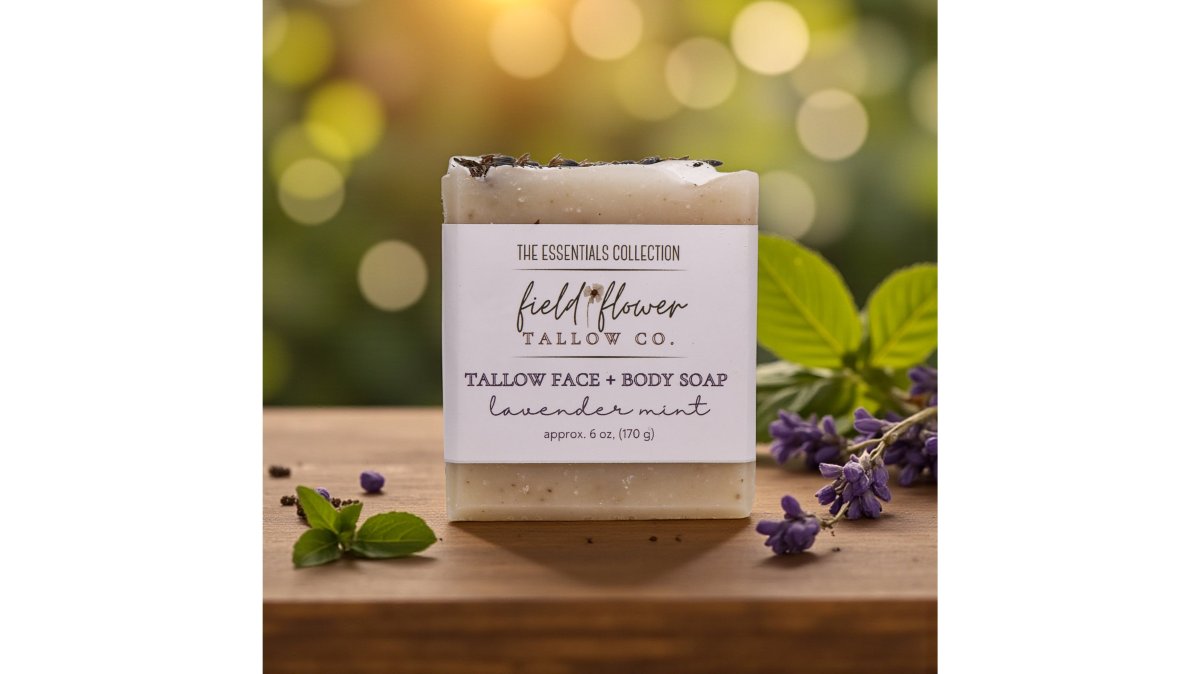
The benefits are real: gentle cleansing, reduced moisture loss, skin conditioning, and ingredient transparency. When you choose a quality small batch soap like our Autumn Apple Tallow + Goat's Milk Soap or Lavender Mint Infused Tallow Soap, you're investing in skincare made with recognizable ingredients your skin actually recognizes and benefits from. Field Flower Tallow Co. handcrafts every bar using traditional cold-process methods, grass-fed tallow, and botanical ingredients, no synthetic detergents, no unnecessary additives. Start with a single bar and experience the difference that genuine small batch craftsmanship makes.

Frequently Asked Questions
What are the benefits of small batch tallow soaps?
Small batch tallow soaps deliver concentrated lipids that soften and condition dry skin without stripping natural moisture. Made with grass-fed tallow, plant oils, and goat's milk, they create a protective lipid layer that helps reduce moisture loss and support the skin barrier. Unlike commercial soaps with harsh detergents, handcrafted tallow soaps use simple, recognizable ingredients that many people find gentler on sensitive or compromised skin.
Does tallow soap clog pores?
Tallow soap does not inherently clog pores. Its fatty acid composition helps condition rather than coat or suffocate pores. Small batch tallow soaps made with balanced ratios of tallow, plant oils, and lathering ingredients like coconut oil are formulated to cleanse effectively while leaving skin soft. If you have oily or acne-prone skin, test a small amount first to see how your skin responds.
What ingredients should I look for in a tallow soap?
Look for grass-fed beef tallow as the primary ingredient, which provides rich fatty acids and vitamins A, D, E, and K. Plant oils such as olive oil and coconut oil add nourishment and improve lather. Raw goat's milk contributes additional fatty acids and helps soften skin. Avoid soaps with synthetic preservatives, emulsifiers, or water as a primary ingredient. Essential oils or botanical infusions should be listed by name, signaling transparency and quality sourcing.
Is small batch tallow soap better for dry skin than commercial soap?
Small batch tallow soaps are formulated to soften and condition dry skin. Their concentrated lipid content helps reduce moisture loss and supports the skin barrier, leaving skin feeling protected and nourished rather than tight or stripped. The simple, recognizable ingredients mean fewer irritants for sensitive or inflamed skin.