

Why Some Essential Oils Irritate Skin: Causes & Prevention
Table of Contents
- How Essential Oils Cause Skin Irritation
- Essential Oil Allergic Reaction Symptoms to Watch For
- The Role of Concentration and Undiluted Use
- How to Dilute Essential Oils for Skin Safety
- Performing an Essential Oil Patch Test
- Essential Oil Rash Treatment and Immediate Care
- Safer Skincare Alternatives for Sensitive Skin
- Frequently Asked Questions
Last Updated: October 12, 2026
How Essential Oils Cause Skin Irritation
Essential oils can trigger skin reactions through several distinct mechanisms. The concentrated plant compounds in these oils are potent and can overwhelm the skin barrier, especially when applied undiluted. Understanding why essential oils irritate skin helps you use them safely or avoid them altogether.
Essential oils contain volatile compounds and active plant constituents that penetrate the skin quickly. These compounds can disrupt the skin's protective barrier and trigger inflammation. Some people experience immediate burning or redness. Others develop delayed reactions after repeated exposure.
The key difference is this: essential oils are not the same as the plant itself. Distillation and extraction concentrate the active compounds into a small volume. What might be mild in a leaf becomes intense in a drop of oil.
Irritant Contact Dermatitis vs. Allergic Contact Dermatitis
Irritant contact dermatitis is a direct chemical reaction. The essential oil damages skin cells on contact. This can happen to anyone if the concentration is high enough. You don't need a prior exposure or genetic sensitivity. The irritant simply overwhelms the skin barrier.
Symptoms appear quickly, often within minutes to hours. Redness, burning, and stinging are common. The reaction is localized to where the oil touched.
Allergic contact dermatitis is different. Your immune system recognizes a component of the essential oil as a threat. After sensitization, even tiny amounts can trigger a delayed hypersensitivity response. This reaction typically takes 24 to 72 hours to appear.
The distinction matters for prevention. Irritant reactions can often be prevented through dilution. Allergic reactions may require complete avoidance of that oil once sensitization occurs.
Phototoxicity and Sun Exposure
Some essential oils trigger phototoxicity when exposed to ultraviolet light. Certain plant compounds, like furocoumarins found in citrus oils, become reactive under sun exposure. The oil itself may feel fine on your skin, but UV rays activate the chemical and cause a severe burn-like reaction.
Phototoxic reactions appear as dark patches or blistering on sun-exposed areas. The damage can be intense and may leave permanent discoloration. This is why citrus essential oils require extra caution.
If you apply an essential oil to your skin, avoid direct sun for at least 12 hours. Better yet, use these oils only in the evening or on covered skin.
Essential Oil Allergic Reaction Symptoms to Watch For
Allergic reactions to essential oils develop over time through repeated exposure. The first use may cause no reaction. The second or third exposure might trigger a full response.
Watch for these warning signs:
- Redness and inflammation appearing 24 to 72 hours after application
- Itching that intensifies over hours
- Burning sensation even after washing the oil away
- Swelling of the skin, lips, or face
- Rash or hives spreading beyond the application site
- Blistering in severe cases
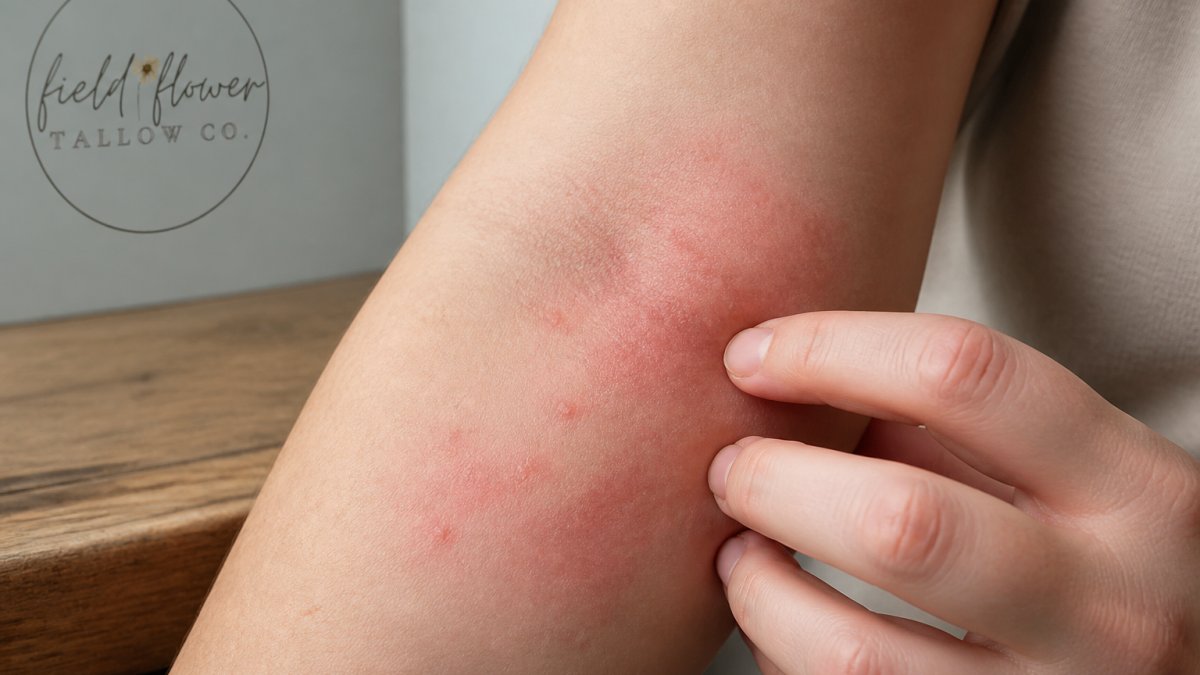
If your reaction includes swelling of the face, lips, or throat, or if you have difficulty breathing, seek medical attention immediately. These are signs of a serious allergic response.
The Role of Concentration and Undiluted Use
Undiluted essential oils are the primary cause of skin irritation. A single drop of pure oil contains a high concentration of active plant compounds. Your skin cannot handle that intensity without damage.
The problem escalates with repeated use. Even if the first application causes only mild redness, continued use can sensitize your skin. Each exposure builds toward a stronger reaction.
Sensitive areas are especially vulnerable:
- Face and neck
- Thin skin on the inner arm or behind the ears
- Broken or inflamed skin
- Areas with eczema or dermatitis
Applying undiluted oil to these zones almost guarantees irritation. The skin barrier is either thinner or already compromised. Concentrated plant compounds will penetrate too deeply and too fast.
How to Dilute Essential Oils for Skin Safety
Dilution is the primary safety tool for essential oil use. A carrier oil reduces the concentration of active compounds and slows penetration, giving your skin time to adjust. But "dilute it" is not enough guidance, the right ratio depends on where you're applying it and who you're applying it to.
Dilution ratios by body area
Application area |
Suggested dilution |
Notes |
|---|---|---|
Face, neck, and décolletage |
0.5-1% |
Thinner skin, higher reactivity |
Full-body massage or daily body lotion |
1-2% |
Standard adult range |
Localized areas (hands, feet, joints) |
2-3% |
Short-term use only |
Spot treatment on a single blemish |
Up to 5% |
Never on broken skin; brief use |
Dilution ratios by user group
- Adults with sensitive or reactive skin: start at 0.5% and stay there until you know how your skin responds.
- Older adults: thinner skin and slower barrier recovery argue for the lower end of the adult range.
- Children: many practitioners recommend avoiding essential oils on infants altogether. For older children, a cautious ceiling is 0.5-1%, and only with oils known to be gentle.
- Pregnancy and breastfeeding: consult a qualified healthcare provider before any topical essential oil use.
What the percentages mean in practice
A "drop" from a standard dropper is roughly 0.05 milliliters. That makes the math simple:
- 1 drop per teaspoon of carrier oil ≈ 1%
- 2-3 drops per teaspoon ≈ 2-3%
- 1 drop per tablespoon of carrier oil ≈ 0.3%, a good starting point for facial use
Measure carefully. Use a small glass or ceramic bowl to mix. Never mix directly on your skin, and never eyeball a "splash" of essential oil into a bottle of carrier.
Choosing a carrier oil
Good carrier oils include:
- Jojoba oil
- Coconut oil
- Olive oil
- Sweet almond oil
These oils are gentle and help distribute the essential oil evenly across your skin. They also condition and protect the skin barrier. If you're layering a diluted blend under a richer balm, apply the diluted oil first, let it absorb for a minute, then follow with the balm to help reduce moisture loss.
When dilution is not enough
Dilution reduces irritant risk but does not eliminate allergic risk. If you have already become sensitized to an oil, even a 0.5% blend can trigger a reaction. And dilution does nothing to prevent phototoxicity, that risk is managed by avoiding sun exposure on treated skin. If you've had a reaction to a specific oil, treat dilution as irrelevant for that oil and avoid it entirely.
Performing an Essential Oil Patch Test
A patch test is your best defense against allergic contact dermatitis. It reveals sensitization before a full-body reaction occurs.
Steps for a safe patch test:
- Dilute your essential oil to 1-2% in a carrier oil
- Apply a dime-sized amount to the inner arm, behind the ear, or inside the elbow
- Cover the area loosely with a bandage or cloth
- Wait 24 to 48 hours without washing the area
- Check for redness, itching, swelling, or rash
- If clear after 48 hours, the oil is likely safe for you
- If any reaction appears, wash it off immediately and avoid that oil
Don't assume a negative patch test means the oil is safe everywhere. You may tolerate it on your arm but react on your face or neck. Start with small amounts on new areas and watch for delayed reactions.
Some reactions take 72 hours to appear. If you notice any symptoms within three days of using a new oil, discontinue it.
Essential Oil Rash Treatment and Immediate Care
If you develop a rash or irritation from essential oils, stop using the oil immediately. Wash the affected area with cool water and a gentle cleanser. Pat dry gently.
For mild irritation:
Unscented Tallow Face + Body Balm →
- Apply a cool compress for 10 to 15 minutes
- Use a fragrance-free moisturizer to calm the skin
- Avoid sun exposure to the area
- Don't apply other products until the skin settles
For moderate reactions:
- Wash with cool water multiple times
- Apply a fragrance-free balm to support your skin barrier
- Take an oral antihistamine if itching is severe
- Avoid scratching, which can worsen inflammation
For severe reactions:
- Contact a healthcare provider or dermatologist
- Do not apply more products without professional guidance
- Photograph the reaction for your records
- Note which oil caused the problem
Most mild to moderate reactions resolve within a few days. Severe reactions may need medical treatment. Phototoxic reactions require special care and may benefit from professional evaluation.
Safer Skincare Alternatives for Sensitive Skin
If essential oils have irritated your skin, you don't need to abandon natural skincare. Many effective alternatives exist without the irritation risk.
Simple, gentle options:
- Unscented balms made with tallow and plant oils deliver rich conditioning without fragrance or essential oils
- Plant-based oils like jojoba, coconut, and olive oil nourish skin on their own
- Mineral-based sun protection avoids chemical filters and essential oils
- Fragrance-free cleansers remove dirt without stripping the skin barrier
At Field Flower Tallow Co., we create skincare with clean, recognizable ingredients, no essential oils added. Our Unscented Tallow Face + Body Balm is formulated specifically for sensitive and reactive skin. Grass-fed beef tallow, coconut oil, and vitamin E work together to condition and protect without fragrance or irritants.

For families with children who have sensitive skin, an unscented approach removes one major trigger. You get effective skincare without the worry of allergic reactions.
If you prefer a cleansing routine without essential oils, try our Simply Radiant Tallow Cleansing Serum. It uses gentle plant oils and tallow to dissolve makeup and buildup while supporting your skin barrier.

For sun protection, our Pure Shield Tallow Sun Barrier Balm uses non-nano zinc oxide, a physical barrier that reflects sunlight without chemical filters or essential oils.

Essential oils irritate skin because their concentrated compounds overwhelm the skin barrier and trigger inflammation or allergic responses. Undiluted use, repeated exposure, and sun exposure amplify the risk. If you've had reactions, patch testing and dilution can help you use oils safely. But for many people, especially those with sensitive or reactive skin, avoiding essential oils altogether is the smartest choice. Simple, fragrance-free skincare with recognizable fats and oils delivers effective results without the irritation. Start with a patch test on any new product, and listen to what your skin tells you.
Frequently Asked Questions
Can essential oils cause allergic contact dermatitis even when diluted?
Yes. Dilution reduces the risk but does not eliminate it entirely. Some people have delayed hypersensitivity or sensitization to specific plant compounds in essential oils, meaning their immune response develops over repeated exposure. A patch test before regular use is the safest way to identify whether you are prone to an allergic reaction. If you have a history of contact dermatitis or sensitive skin, start with very dilute formulations and monitor your skin carefully.
How long does an essential oil skin reaction typically last?
Irritant contact dermatitis from undiluted or highly concentrated essential oils may resolve within hours to a few days once the irritant is removed and the skin is rinsed thoroughly. Allergic contact dermatitis usually appears 24–72 hours after exposure and can persist for 1–3 weeks or longer, depending on severity and whether you continue exposure. If redness, itching, or swelling worsens or does not improve after a few days, seek medical evaluation to rule out infection or a more serious reaction.
What should I do immediately if an essential oil irritates my skin?
Stop using the product immediately. Rinse the affected area thoroughly with cool water and mild soap to remove any remaining oil. Pat dry gently and avoid applying other products until the irritation subsides. Do not scratch or pick at the area. If the reaction is severe—blistering, intense swelling, or spreading beyond the application site—seek medical attention. For mild reactions, monitor the area over the next few days and avoid sun exposure to the irritated skin.
Which essential oils are most likely to cause skin reactions?
Citrus oils (lemon, lime, bergamot), cinnamon, clove, oregano, and thyme are among the most common irritants due to their high concentration of volatile compounds and furocoumarins. Lavender and tea tree, though popular, can trigger allergic contact dermatitis in sensitive individuals, especially with repeated exposure. Plant compounds in these oils can damage the skin barrier, trigger immune responses, or cause phototoxicity when skin is exposed to sunlight. Always patch test unfamiliar essential oils and follow dilution guidelines carefully.