

Is Tallow Good for Psoriasis? A Balanced 2026 Guide
Table of Contents
- What Is Tallow and Why It's Different From Lotion
- How Tallow May Help Psoriasis Symptoms
- Tallow Balm vs Conventional Lotion: What to Expect
- How to Apply Tallow Balm Effectively for Flare-Ups
- How to Manage Dry Skin Naturally Alongside Psoriasis Care
- Sourcing, Processing, and What to Look For
- Potential Side Effects, Safety, and When to See a Doctor
- Frequently Asked Questions
Last Updated: September 11, 2026
What Is Tallow and Why It's Different From Lotion
Tallow is a rendered animal fat, composed primarily of triglycerides and fatty acids. In skincare, it functions as a rich, lipid-based conditioner rather than a water-based moisturizer. This distinction matters when asking is tallow good for psoriasis, because most conventional lotions are emulsions built around a substantial water phase, while tallow balms are anhydrous. At Field Flower Tallow Co., we build our formulas around grass-fed beef tallow and plant oils, so the starting point is entirely different.
Conventional lotions typically combine water, humectants, oils, emulsifiers, and preservatives. Because water is present, those products need ingredients and techniques that keep oil and water combined and control microbial growth. A tallow balm skips that water phase altogether.
The Anhydrous Difference: No Water Phase
An anhydrous balm contains no water. That means no emulsifiers to hold phases together and no water-driven preservation challenge. Instead, concentrated lipids are delivered directly to the skin, where they coat, condition, and help form a protective layer that can slow moisture loss. This is why a small amount of balm goes a long way compared to a pump of lotion.
Fatty Acids and Lipid Profile
Tallow's fatty acid profile, including stearic acid, gives it a rich, substantial feel on the skin. Plant oils like olive and jojoba contribute additional lipids and improve spreadability. Together they create a formula that softens dry, rough skin and helps support the skin barrier rather than simply adding surface moisture.
How Tallow May Help Psoriasis Symptoms
Psoriasis is an autoimmune-driven condition, and no topical product cures it (the CDC). What a lipid-rich balm can do is address the symptom that causes the most daily discomfort: dryness, scaling, and a compromised moisture barrier. If you are asking is tallow good for psoriasis, the honest answer is that it may help manage symptoms, not treat the underlying immune dysfunction.
Moisture Retention and Transepidermal Water Loss
Transepidermal water loss rises when the skin barrier is impaired, which is common with psoriasis plaques (peer-reviewed research). A protective lipid layer can help reduce that loss. For especially dry, flaky patches, applying balm to slightly damp skin after a shower helps seal in water already present on the surface.
Anti-Inflammatory Potential of Stearic Acid
Stearic acid, a fatty acid abundant in tallow, is often discussed for its soothing properties in skincare. Clinical evidence specific to tallow and psoriasis remains limited.
Tallow Balm vs Conventional Lotion: What to Expect
The practical differences show up fast when you switch. Here is how a tallow balm compares to a conventional water-based lotion:
Feature |
Tallow Balm |
Conventional Lotion |
|---|---|---|
Base |
Anhydrous lipids |
Water-based emulsion |
Texture |
Rich, concentrated |
Light, spreadable |
Amount needed |
Small |
Larger |
Fragrance |
Unscented and Naturally scented options |
Heavily fragranced |
Best for |
Dry Skin, Oily Skin, Everyday moisture |
Everyday light moisture |
If you are used to drugstore lotions, expect a learning curve. A pea-sized amount of balm covers far more area than you would guess, and it absorbs differently, leaving a protective finish rather than a watery one.
How to Apply Tallow Balm Effectively for Flare-Ups
Application mechanics matter more with an anhydrous balm than with a lotion, because you are laying down a concentrated lipid layer rather than spreading a water-based emulsion. The goal during a flare is to condition and protect compromised skin without adding friction, heat, or occlusion over an area that is already inflamed.
The Basic Routine
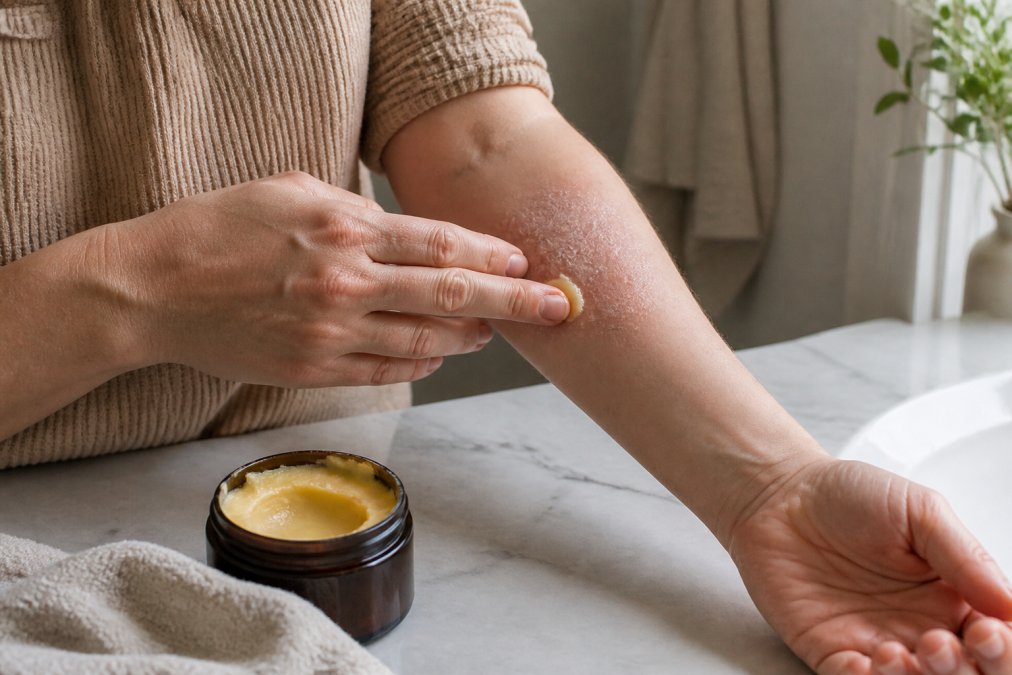
Apply balm to clean, slightly damp skin within a few minutes of bathing, while the surface still holds water from the shower. Warm a small amount between your palms first, body heat softens the fat and makes it spread further, then press it into the affected area rather than rubbing aggressively. During a flare-up, gentleness matters as much as the product.
A common mistake is over-applying. More balm does not mean faster results, and a thick layer can feel greasy and trap heat on irritated skin. Start thin, and add a second layer only if the skin still feels tight after ten minutes.
Layering With Prescription Psoriasis Topicals
This is the part most tallow articles skip, and it is the part that matters if you are already under a dermatologist's care. Psoriasis is frequently managed with prescription topicals, and how you sequence a lipid balm around them changes both comfort and results.
- Corticosteroid creams and ointments: These are typically applied first, to clean skin, and allowed to absorb. A rich lipid balm applied on top can help reduce moisture loss and ease the dryness that often follows steroid use, but applying balm before the steroid can create a lipid layer that interferes with how evenly the medication contacts the skin. A common pattern is medication first, balm 15-30 minutes later (the American Academy of Dermatology).
- Vitamin D analog creams (such as calcipotriene): These are often irritating around folds and sensitive areas. Many practitioners suggest applying the medication to the plaque itself and using a balm on the surrounding dry skin rather than over the treated area, unless your dermatologist says otherwise.
- Salicylic acid and coal tar preparations: These are exfoliating or keratolytic, meaning they break down scale. Layering a heavy lipid balm directly over them can slow their action. Keep them separate, different times of day works well, and let each product do its job.
- Biologics and systemic treatments: These work internally and are not affected by what you put on your skin, but your skin may still be dry and reactive. A simple, fragrance-free lipid balm is a reasonable supportive step.
Patch Testing Protocol Before First Use
Patch testing is the step most people skip, and it is the one that prevents surprises. Before applying balm to a large area or to a child's skin, follow this protocol:
- Choose a small test area, such as the inner forearm
- Wash and dry the area, then apply a pea-sized amount
- Wait 24 hours without washing the spot
- Check for redness, itching, or swelling
- If clear, repeat on a second small area for another 24 hours
- Only then begin regular use on affected areas
If a reaction appears at any stage, stop use and consult a dermatologist. This is especially important for anyone using prescription topicals, since layering products can affect how each one performs.
Adjusting for Flare Stage
During an active, angry flare, less is more: a thin layer of a fragrance-free balm on the surrounding dry skin, and nothing occlusive directly over cracked or weeping plaques. As the flare settles and skin shifts from inflamed to dry and flaky, you can apply more liberally. Between flares, consistent conditioning is what helps keep the barrier intact so the next trigger does less damage.
How to Manage Dry Skin Naturally Alongside Psoriasis Care
Managing dry skin naturally works best as support, not replacement, for whatever your dermatologist has prescribed. The goal is to keep the skin barrier as intact as possible between flares. A few habits make a real difference:
- Apply a lipid-rich balm within minutes of showering
- Keep showers warm rather than hot, and short rather than long
- Choose fragrance-free products when skin is reactive
- Avoid harsh scrubs and exfoliants on active plaques
- Wear soft, breathable fabrics over irritated areas
A fragrance-free option like our Unscented Tallow Face + Body Balm fits this routine because it contains no added essential oils, which is often the trigger for reactive skin. For cleansing, a gentle bar such as our Unscented Tallow + Goat's Milk Soap avoids stripping the skin before you apply balm.
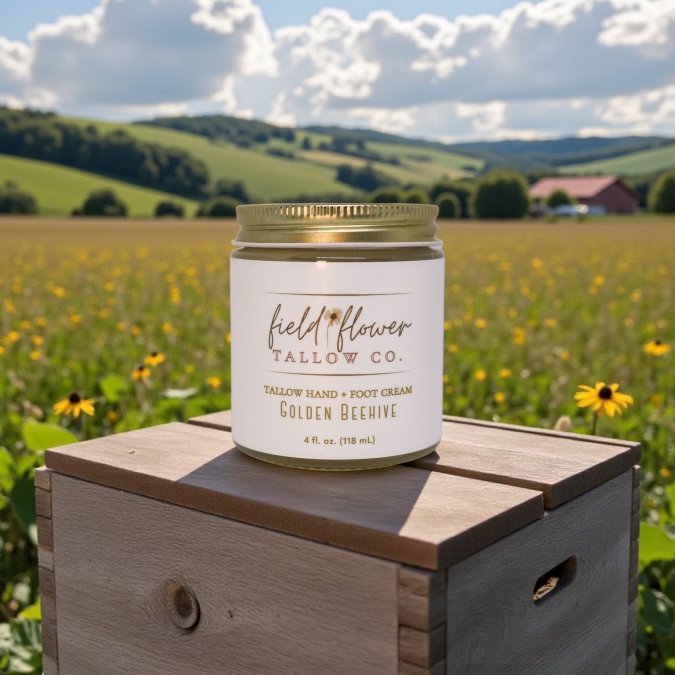
Golden Beehive Tallow Hand + Foot Cream
Sourcing, Processing, and What to Look For
Sourcing transparency separates a good tallow product from a mediocre one, but the words on the front of the jar tell you very little. The real differences are in how the fat was rendered and whether it was refined afterward, and almost no tallow article explains this.
Rendered Fat vs. Refined, Deodorized Tallow
Tallow starts as suet or fat trimmed from beef. To become skincare, it has to be rendered, gently heated to separate the pure fat from connective tissue, protein, and water. What happens next is where products diverge.
- Gentle, low-heat rendering: The fat is melted slowly and filtered. This preserves the fat's natural color, mild beef scent, and its full fatty acid profile. It is the approach small, transparent tallow brands use, and it is what you want if you are buying tallow for its lipid content rather than its label.
- Industrial rendering and refining: Large-scale tallow is often bleached, deodorized, and sometimes hydrogenated to produce a uniform, odorless, shelf-stable fat. This is efficient and consistent, but the processing strips much of what makes tallow distinctive. A jar made from refined tallow is technically still tallow, but it is a different raw material.
Reading the Ingredient List Honestly
Look for grass-fed, grass-finished beef tallow as the first ingredient, followed by recognizable plant oils, olive, jojoba, coconut, and beeswax where structure is needed. Vitamin E (tocopherol) is common as an antioxidant to protect the oils from oxidizing. A short list is not automatically better, but it is easier to audit.
What to be cautious about:
- Heavy fragrance or 'parfum' high on the list. Fragrance is a common trigger for reactive, psoriasis-prone skin. Unscented or essential-oil-light formulas are the safer starting point.
- Vague sourcing. 'Grass-fed' without a country or farm of origin tells you almost nothing. A transparent brand will tell you where the fat comes from and how it is handled.
- Claims that tallow is 'identical to your skin's sebum.' It is not. Tallow and human sebum share some lipid components, but they are not the same substance, and any brand claiming otherwise is overselling.
Why Processing Affects Allergen Risk
Residual protein from incomplete rendering is the most likely source of a reaction to an animal-fat product. Thorough, careful rendering removes more of that protein. If you have a known beef allergy, this is the reason to patch test carefully, or to avoid tallow altogether, regardless of how the product is marketed.
If you have been burned by 'natural' skincare before, ask the hard questions. A transparent brand will tell you exactly what is in the jar and why.
Potential Side Effects, Safety, and When to See a Doctor
Tallow balm is generally well tolerated, but it is not risk-free for everyone. Because it is an animal-derived fat, anyone with a known allergy to beef products should patch test carefully or avoid it. Fragranced versions can irritate reactive skin, which is why unscented formulas are the safer starting point for psoriasis-prone skin.
A water-free balm also has a different preservation profile than a lotion. Water contamination can still be introduced through wet fingers or humid bathrooms, so keep jars clean, close them tightly, and avoid scooping with damp hands.
See a doctor if you notice spreading redness, warmth, pus, or fever, or if plaques worsen despite consistent care. Psoriasis is an autoimmune condition, and topical products manage symptoms; they do not address the immune dysfunction underneath. If your skin is not improving, that is a conversation for a dermatologist, not a bigger jar of balm.
Psoriasis is stubborn, and finding a routine that respects both your skin barrier and your patience takes trial and error. Field Flower Tallow Co. makes that easier with simple, lipid-rich formulas built on recognizable ingredients, including our Unscented Tallow Face + Body Balm and our Unscented Tallow + Goat's Milk Soap, both made without added fragrance for reactive skin. Bundle options let you try a balm and soap together. Shop Field Flower Tallow Co. and give your skin a simpler, more concentrated way to stay conditioned and protected.

Frequently Asked Questions
Is tallow cream safe for psoriasis?
Tallow balm is generally well tolerated on psoriasis-prone skin because it is lipid-rich and water-free, which means it does not require preservatives or emulsifiers that can sometimes irritate sensitive skin. That said, psoriasis is an autoimmune condition, and tallow is a symptom-management tool, not a treatment. Patch test on a small area first, avoid applying to cracked or bleeding plaques, and check with your dermatologist before adding any new product to your routine.
Can tallow balm help reduce moisture loss in psoriasis?
Yes, and this is where tallow balm has a clear advantage. Psoriasis compromises skin barrier function, which increases transepidermal water loss and leads to scaling and cracking. A concentrated, lipid-based balm creates a protective layer on the skin's surface that helps slow that moisture loss. For best results, apply to slightly damp skin after a shower so the balm can help seal in the water already present on your skin.
What makes anhydrous tallow balm different from water-based lotions?
Conventional lotions are emulsions with a substantial water phase, which means they need emulsifiers and preservatives to stay stable and microbiologically safe. Anhydrous tallow balm contains no water phase at all. Instead, it delivers concentrated lipids from grass-fed beef tallow and plant oils directly to the skin, conditioning it and forming a protective layer that helps reduce moisture loss. A small amount goes much further than a standard lotion.
How should I apply tallow balm to psoriasis-prone skin?
Start with clean, slightly damp skin. Warm a pea-sized amount between your palms and press it gently into the affected area rather than rubbing aggressively. Avoid broken or bleeding plaques. For flare-ups, apply twice daily, morning and night, and layer it over any prescription topical only after checking with your doctor. Patch test on your inner forearm for 24 to 48 hours before using it on larger areas of your body.