

How to Use Tallow Serum for Skin Elasticity
Table of Contents
- What Tallow Serum Is and How It Works on Skin
- What You'll Need Before You Start
- Step-by-Step: How to Apply Tallow Serum to Your Face
- Does Tallow Help Tighten Skin? What the Evidence Says
- Tallow Serum Before or After Moisturizer: Getting the Order Right
- Tallow Serum for Sensitive Skin: Who Should Be Careful
- Common Mistakes to Avoid
- Conclusion
- Frequently Asked Questions
Last Updated: October 18, 2026
What Tallow Serum Is and How It Works on Skin
A tallow serum is a water-free, lipid-based skin treatment built around rendered beef tallow and plant oils. It conditions the skin with concentrated fats rather than delivering a water-based moisturizer. At Field Flower Tallow Co., we make our cleansing serums from grass-fed beef tallow, castor oil, sweet almond oil, coconut oil, carrot seed oil, and vitamin E.
The formulation difference matters. Most conventional lotions and creams are emulsions with a large water phase, which is why they need emulsifiers and preservatives to stay stable. Our serums contain no water phase at all. That changes how they behave on skin.
So how does a tallow serum support skin? Tallow is a rendered fat made mostly of triglycerides and fatty acids. Applied to skin, it provides rich lipids that soften and condition, and it leaves a protective layer that helps slow moisture loss. Consistent lipid nourishment helps support the skin barrier.
- Rich lipids: fatty acids that soften dry, rough texture
- Protective layer: helps reduce moisture loss through the day
- Barrier support: keeps skin feeling comfortable and supple
- No water phase: concentrated, so a small amount goes far
What You'll Need Before You Start
You need three things: a clean face, clean hands, and a pea-sized amount of tallow serum. That's it. No tools, no ten-step prep.
Here is the short list:
- A gentle cleanser. Our Simply Radiant Tallow Cleansing Serum is unscented and made for sensitive skin. Apply 4-6 drops to dry skin, massage gently, let it sit about a minute, then rinse with warm water and pat dry.
- Clean hands. Fingers carry bacteria. Wash them before you touch your face.
- A pea-sized amount of serum. More is not better with a concentrated lipid formula.
- Two minutes of quiet. This is a press-and-pat routine, not a rub-hard routine.
If you have very dry skin, leave your face slightly damp after cleansing. The serum can then help reduce evaporation of the water already sitting on your skin. It does not pull that water in. It helps keep it from leaving.

Step-by-Step: How to Apply Tallow Serum to Your Face
Follow this order every time. It takes about two minutes.
- Cleanse and pat dry. Leave skin slightly damp if it feels tight or dry.
- Warm the serum between your fingertips. A pea-sized amount, rubbed for a few seconds. Body heat makes it spread further.
- Press into skin, don't rub. Start at the center of your face and work outward and upward. Use gentle pressure.
- Give extra attention to dry zones. Cheeks, around the nose, and the jawline usually need it most.
- Let it settle for a minute. Then follow with moisturizer if you use one.
- Use it once or twice daily. Morning and evening both work.
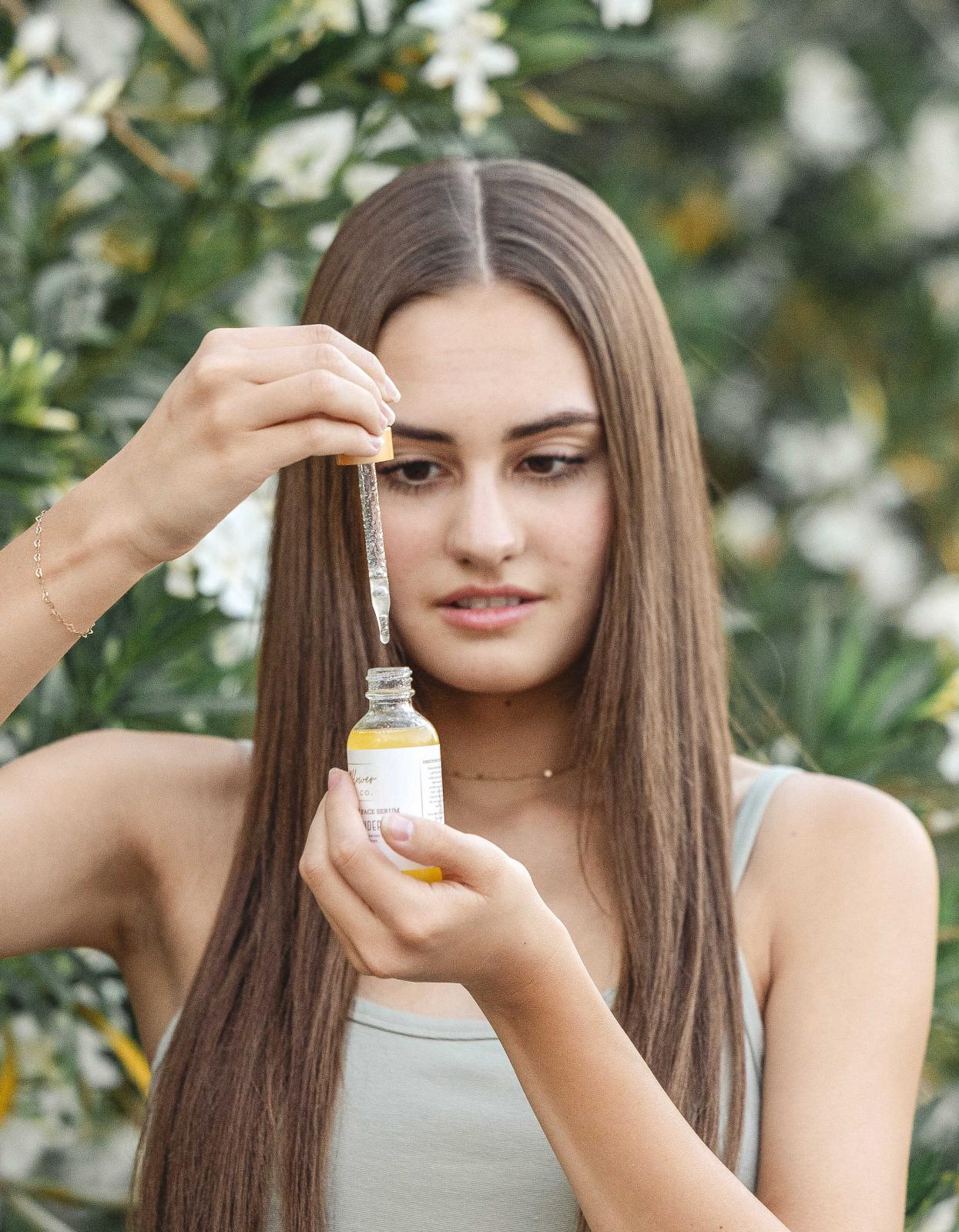
Does Tallow Help Tighten Skin? What the Evidence Says
Start with the honest answer: no strong clinical evidence shows that tallow rebuilds collagen or reverses aging. Anyone who tells you otherwise is selling certainty they don't have.
What tallow actually does, mechanistically. Tallow is a rendered fat made mostly of triglycerides and fatty acids. Pressed onto skin, it leaves a lipid-rich layer that helps soften and condition the surface and helps slow moisture loss through the day.
Why conditioned skin reads as "firmer." Skin that is well conditioned and holding moisture reflects light more evenly, feels more supple under the fingertip, and shows fine dry lines less sharply. People describe that as tightening.
What the label vitamins can and can't do. Tallow contains vitamins A, D, E, and K naturally. Vitamin E is an antioxidant that helps protect the oils in a formula from oxidation, and it has skin-conditioning properties (pubmed.ncbi.nlm.nih.gov). But "contains vitamin A" is not the same as "firms skin." The amounts present in a tallow serum are not comparable to a formulated retinoid, and no one should treat a balm or serum as a retinoid substitute.
Realistic timelines and what to watch for. A common pattern with consistent daily use:
- Days 1-7: skin feels softer and less tight after cleansing; dry patches on cheeks and around the nose look less rough.
- Weeks 2-4: fine dry lines, the ones that appear when skin is dehydrated, look softer; makeup sits more smoothly over dry zones.
- Weeks 4-8: the overall feel is more supple and comfortable; the "tight after washing" sensation fades.
- Beyond that: the plateau is the point. A lipid serum maintains conditioned skin; it does not keep escalating results the way a structural treatment would.
A simple way to actually track change. Pick one check-in day per week and use the same light. Look at the same two or three spots, usually the cheek, the area beside the nose, and the jawline.
What would actually support collagen. For context on what genuinely supports collagen and skin structure, the American Academy of Dermatology's guidance on skin care is a better starting point than any balm label.
Tallow Serum Before or After Moisturizer: Getting the Order Right
Apply tallow serum before moisturizer, not after. Lipid-rich products go on before heavier creams so they can sit closer to the skin.
Think of it as thinnest to thickest. Your serum is concentrated but spreadable. A moisturizer or balm on top seals everything in.
A simple order that works:
- Morning: cleanse, tallow serum, moisturizer, sunscreen
- Evening: cleanse, tallow serum, moisturizer or balm
One caution on the morning routine. A tallow serum is not a sunscreen. If you use active ingredients like retinoids or exfoliating acids, apply those first, wait, then follow with serum.
Don't layer a tallow serum over a strong acid treatment and expect the same result. The lipid layer can slow absorption of actives applied afterward. Actives first, serum second.
Tallow Serum for Sensitive Skin: Who Should Be Careful
Most people with sensitive skin tolerate a simple, water-free tallow serum well, because there is no water phase, no emulsifier system, and a short ingredient list.
Patch test, and do it properly. Apply a small amount to your inner forearm, cover it lightly, and wait 24 hours. Check again at 48 hours if you have a history of delayed reactions.
Who should be cautious, and why:
- Essential-oil reactors. Scented serums contain essential oils. If you have reacted to lavender, citrus, or other botanicals before, start with the unscented Simply Radiant formula. Fragrance reaction is one of the most common reasons a "gentle" product stings.
- Diagnosed fragrance allergy. Same answer: unscented only. Do not assume a natural essential oil is safer than a synthetic fragrance if you have a diagnosed allergy, the reaction is to the compound, not its origin.
- Active eczema flares with broken skin. Wait until the flare settles. A rich lipid layer over cracked, weeping skin can trap irritation and make the area feel worse before it feels better. Once the skin is intact, a thin layer can help condition it.
- Acne-prone and clog-prone skin. Tallow is rich, and richness is the point, but that same quality can feel heavy on the chin, forehead, and jaw. Use less than you think you need, keep it off actively congested areas, and watch for new closed comedones over two to three weeks. If they appear, back off to every other day or use it only on dry zones.
- Anyone managing a skin condition with a dermatologist. Ask before adding anything new, especially if you are on a prescription topical. A lipid layer can change how a prescription product absorbs if you layer it on top.
Rancidity is a real safety issue, not a marketing one. Tallow and plant oils oxidize. Heat, light, and air speed that up. Store your serum capped, in a cool spot away from the shower and the windowsill, and use clean, dry fingers every time.
Water contamination still matters. A water-free formula is not a sterile one. Wet fingers, a damp bathroom, and an open jar can all introduce water and microbes. Keep the lid closed, keep water out of the jar, and do not scoop with damp hands.
Layering around actives and sunscreen. If you use retinoids, exfoliating acids, or vitamin C, apply those first, let them absorb, then follow with the serum. A lipid layer applied first can slow the absorption of actives applied afterward.
If you are unsure whether a reaction is irritation or a true allergy, especially swelling, hives, or spreading redness, stop using the product and talk to a clinician. A patch test reduces risk; it does not eliminate it.
For sensitive skin, unscented and simple beats "packed with botanicals" every time. Fewer ingredients means fewer things to react to, and a short ingredient list is easier to troubleshoot when something goes wrong.
Common Mistakes to Avoid
The biggest mistake is using too much. A tallow serum is concentrated, and a pea-sized amount covers the whole face. Over-applying leaves a heavy film and wastes product.
Others we see often:
- Rubbing instead of pressing. Hard rubbing drags on skin. Press and pat.
- Applying to bone-dry, tight skin. Slightly damp skin gives the lipid layer something to work with.
- Skipping the patch test. Especially with a scented formula.
- Expecting collagen-level changes in a week. Give it several weeks of consistent use before judging.
- Storing it somewhere hot. Heat degrades oils. Keep it cool and capped.
- Using dirty fingers in the jar. Clean hands, every time.
The realistic expectation is softer, more comfortable, better-conditioned skin over a few weeks of daily use. That is a good outcome. It is just not the same as a cosmetic procedure.
Conclusion
Building a routine around a concentrated, water-free serum asks you to slow down and use less, and that is exactly why it works for dry, reactive skin. Start with a patch test, warm a pea-sized amount between your fingertips, press it into slightly damp skin, and let the lipid layer do its quiet work.
If you want a gentle place to start, our Simply Radiant Tallow Cleansing Serum is unscented and made for sensitive skin, and our Fresh Lavender Tallow Cleansing Serum adds a calming lavender note for evening use. Both are $20.00, and bundle options let you try more than one without committing to a subscription.

Frequently Asked Questions
Can tallow serum improve skin elasticity?
Tallow serum can help soften and condition the skin and reduce moisture loss by forming a protective lipid layer, which may make skin feel more supple over time. However, no topical product can rebuild collagen or reverse elasticity loss on its own. Think of tallow serum as barrier support and lasting conditioning, not a collagen treatment. Results depend on consistent use, your skin type, and other factors like sun exposure and hydration.
Should you apply tallow serum to damp or dry skin?
Apply tallow serum to clean, slightly damp skin for the best glide and absorption. The thin layer of water on your skin can help the serum spread evenly, and the lipid-rich formula then helps reduce evaporation of that surface moisture. If your skin is very dry, a quick mist of water before applying works well. Always use clean hands and a pea-sized amount.
How often should you use tallow serum?
Most people do well using tallow serum once or twice daily, typically in the evening after cleansing. Start with once a day for the first week to see how your skin responds, especially if you have sensitive skin. A small amount goes a long way, so a pea-sized amount is enough for the face. Adjust frequency based on how your skin feels.
Can you use tallow serum with other skincare products?
Yes, tallow serum can fit into a routine with other products, but order matters. Apply water-based products first, then tallow serum, and finish with sunscreen in the morning. If you use active ingredients, introduce tallow serum separately to see how your skin reacts. For sensitive skin, patch test first and keep the rest of your routine simple.
Your skin doesn't need a twelve-step routine. It needs recognizable ingredients, applied gently, consistently. Field Flower Tallow Co. makes handcrafted, lipid-rich skincare from grass-fed tallow and simple plant oils, with unscented options for reactive skin and bundle savings when you find your favorite. Shop the serums and start with one product, not five.